private label packaging design: from made-for-you to your brand
Private label packaging is the packaging for a product that a contract manufacturer makes and you sell under your own brand. The product may be close to what other brands buy from the same factory, so the packaging carries most of the difference: your name, your look, the way your range is organized, and the information the law requires from the company that puts its name on the pack.
Good private label design does four things. It is built on the manufacturer’s stock containers or dielines from the start. It builds one visual system that covers every product in your range, even when they come from different suppliers. It puts the required “Manufactured for” or “Distributed by” line, your own barcodes, and the regulatory copy in the right places. And it gives the product a reason to be chosen that has nothing to do with the formula, because a competitor can buy the same formula.
Our private label work is priced the way a range grows: $2,500 to set up the system with the first product, about $800 for each product after that, and from $1,500 if all you need is a label. We design only and prepare files to your manufacturer’s or printer’s specs.
Private label, white label, contract manufacturing, and branded products
The terms overlap, and suppliers use them loosely. Roughly:
| Term | What it usually means | What it means for packaging |
|---|---|---|
| Private label | A manufacturer makes a product sold only under your brand, often to your spec | You own the packaging design and usually the label copy |
| White label | A ready-made, generic product that many sellers can rebrand | Differentiation comes almost entirely from packaging and marketing |
| Contract manufacturing | A factory produces your own formula or recipe | Same packaging work; you also own the formula |
| Store brand | A retailer’s own brand, usually made by contract manufacturers, sometimes in the retailer’s own plants | Follows the retailer’s brand system and tiers |
| Branded (national brand) | A company that develops, makes or controls, and markets its own products | Packaging competes with store brands on trust and recognition |
For the design work, the difference between private and white label matters less than one question: how much of the physical package can you change? Some suppliers let you choose the container, cap, and color. Others give you a fixed bottle and a label size, and the label is the whole canvas.
Private label vs branded: why packaging carries more weight
A national brand can lean on years of advertising and recognition. A private label product starts with none of that and often sits next to the brand it competes with, sometimes at a lower price. Shoppers decide in a few seconds whether it looks trustworthy, and the packaging is most of what they have to go on.
That cuts both ways. Looking cheap confirms the doubt. Looking like a copy of the market leader can work for a store brand’s “compare to” range, but copying a specific brand’s distinctive look too closely invites legal trouble and makes your brand forgettable. The stronger approach is to follow the category’s general cues, so shoppers know what the product is, and build your own assets on top: color, type, a layout, a symbol.
Designing around stock containers and dielines
Most private label products ship in stock components: a standard jar, a stock pouch size, an off-the-shelf bottle and cap. The manufacturer provides a label size or a dieline, and the design has to live inside it.
What helps:
- Get the templates first. Ask for the exact label size, the container dimensions, and the dieline before any concepts. Our guide to what a dieline is covers what to request.
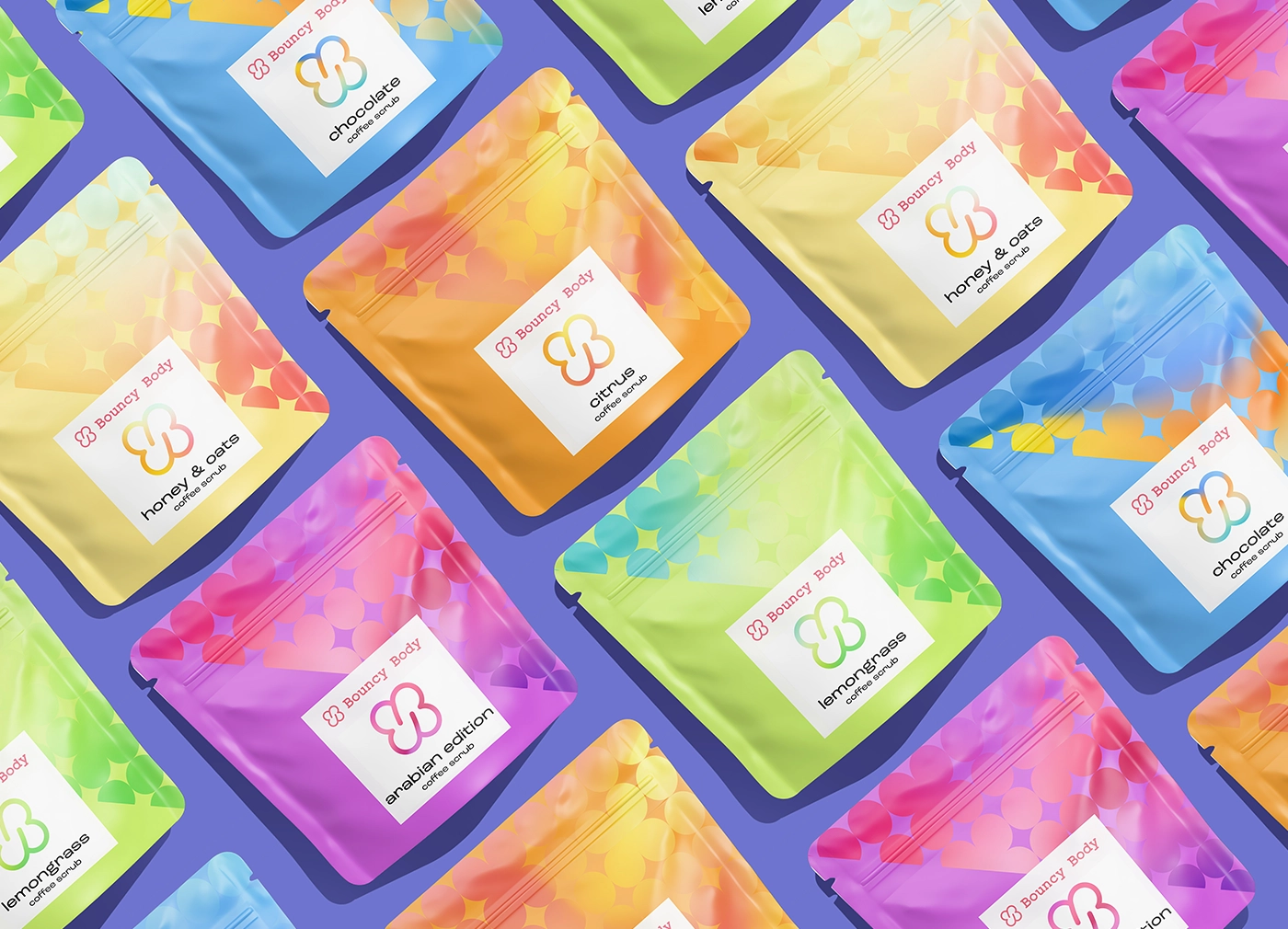
- Use color, finish, and the label shape to stand apart. If the jar is the same as five other brands’, a different label shape, a strong color system, or a matte or metallic finish does most of the work.
- Start with labels, plan for printed packaging. Labels on stock containers keep minimums low while you test a product. If it sells, you may move to printed pouches or custom cartons. A system designed with both in mind avoids a redesign later.
- Check the material early. A label on a clear or colored bottle, or a print on kraft paper, shows colors differently from white. Ask for a sample before the full order.
One system for the whole range
Private label ranges grow fast. A supplier offers twenty products, and it’s tempting to add them one by one, each designed on its own. After a year the shelf looks like ten different companies.
The fix is to design a system once:
- Fixed brand zone. The logo in the same position and size on every product.
- Product name and type in a consistent place and style, so people find what they need.
- A variant code. Color by product type, flavor, or scent, applied the same way across the range.
- Fixed places for claims and required text, so new products are faster to lay out and check.
- Room to grow. Leave color and layout options for products you don’t sell yet.
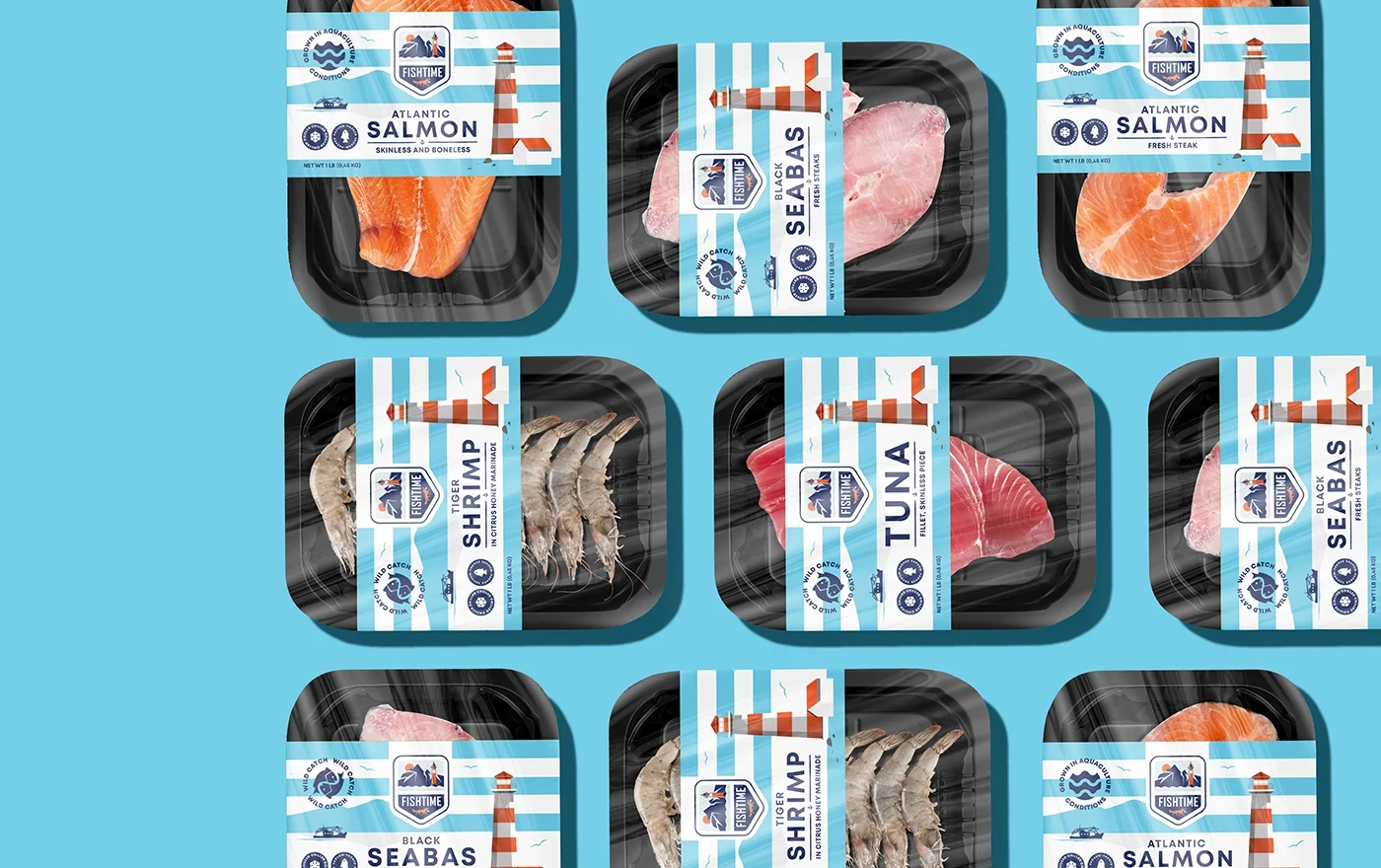
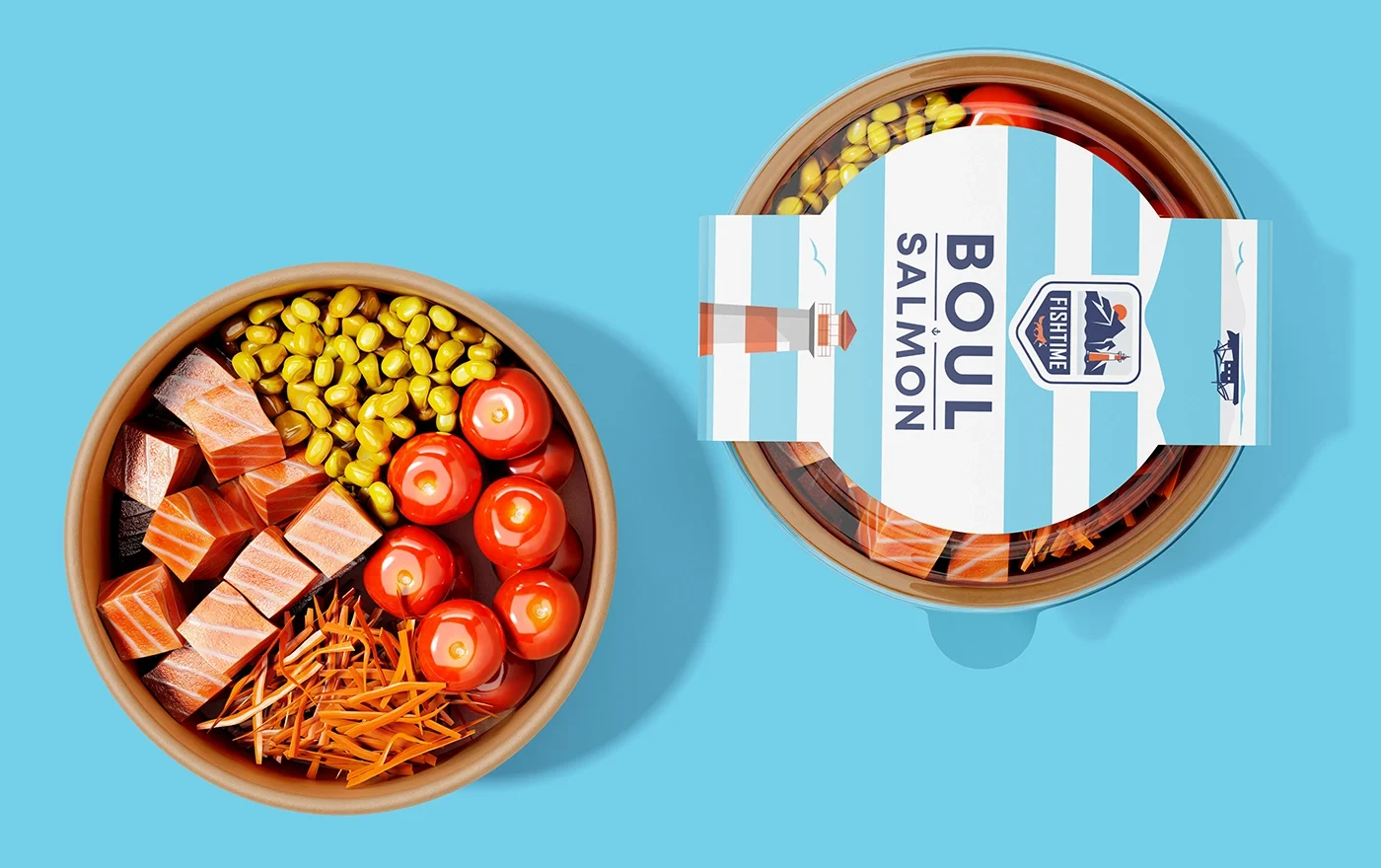
Adding a product to an existing system is far cheaper and faster than starting over, which is the same logic as adding a flavor to a line. Our article on line extensions and brand extensions covers how to decide what stays fixed. For an example of one system stretched across a large range, see our Fishtime packaging, designed to hold more than twenty SKUs without losing clarity.
launching a private label range?
send us your products and the manufacturer’s templates: one system for the whole line, fixed estimate in 1-2 business days
get quoteRequired information when someone else makes the product
Putting your brand on a product you didn’t manufacture is normal and legal, but the label has to say so. This guide covers design, so check the final copy with a regulatory reviewer. The points that most often affect the layout:
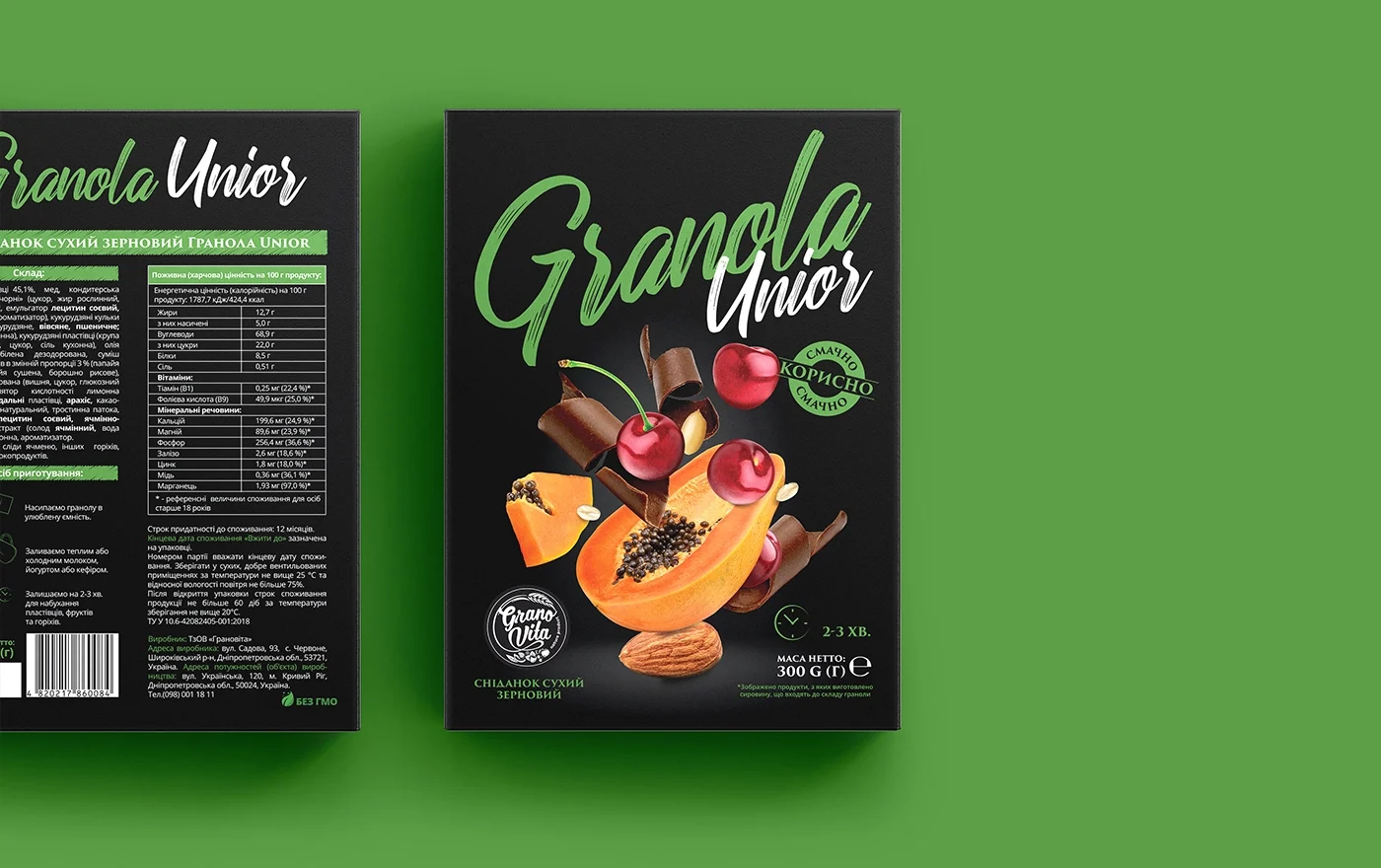
- “Manufactured for” or “Distributed by.” For packaged food, when the name on the label isn’t the manufacturer, it has to be qualified with a phrase such as “Distributed by” or “Manufactured for,” then your name and address (21 CFR 101.5). Cosmetics follow a similar rule.
- Regulatory copy from the manufacturer, responsibility with you. The supplier usually provides the ingredient list, the Nutrition Facts or other required panels, and test results. Your name is on the pack, so check that the copy matches the product you actually receive. For food, our food label requirements guide covers the required panels.
- Country of origin. Imported products generally need to show where they were made.
- Claims. “Organic,” “gluten-free,” “vegan,” and similar claims have to be true for the product and backed by the supplier’s documentation or certification. Don’t copy claims from the supplier’s own branded version without checking.
Your own barcodes
Your products need barcodes that belong to your brand, not the manufacturer’s. In the GS1 system, the brand owner, meaning the company that owns the product’s specifications and sells it under its brand, is responsible for assigning the product’s GTIN, the number behind the UPC barcode (GS1 US). For a retailer’s store brand, that is usually the retailer.
For design, plan a fixed barcode position in the system, at the size and with the empty margin your printer and retailers require, and away from folds, seams, and curves.
Designing a store brand for a retailer
When a retailer builds its own brand, the packaging works in tiers, and each tier needs its own look inside one family:
- Value tier. Simple and clear, often one or two colors, the price is the message.
- Mainstream tier. Positioned against national brands. Clear product photography, familiar category cues, and the retailer’s brand as a promise of quality.
- Premium tier. Its own name and design, sometimes barely connected to the store, built to compete with specialty brands.
Retailers usually have packaging guidelines that suppliers and designers follow, covering logo use, color, and the order of information. The design job is to make each product feel part of that system while still selling on its own shelf.
Common private label packaging mistakes
- Using the supplier’s sample design. Many manufacturers offer a “free design” that dozens of other sellers also use.
- Designing before the container is fixed. A change from a 250 ml to a 300 ml bottle changes the label.
- Copying claims from the supplier’s catalog without checking that they apply to your version.
- One-off designs for each product, so the range never reads as a brand.
- Ignoring the barcode and required text until the end, then forcing them into the artwork.
- No physical sample. Colors on a clear jar, a kraft pouch, or a metallic label rarely match the screen.
What private label packaging design costs
For a range, the numbers add up like this: the system and the first product from $2,500, each further product about $800, a logo about $1,500 if the brand is new, and a small discount once the range reaches about ten SKUs.
| Project | Calculation | Approximate design cost |
|---|---|---|
| New brand: logo plus 4 products | $1,500 + $2,500 + 3 × $800 | $6,400 |
| Range of 10 products in one system | with the multi-SKU discount | about $8,000 |
| Label for one product on a stock bottle | from $1,500 | from $1,500 |
For what moves the price up or down, see packaging design cost. Our label design and packaging design pages show how we work.
How a private label project runs
- Supplier specs. Containers, label sizes or dielines, materials, print method, minimum order quantities.
- Brief. Brand, buyer, range, price position, and channels.
- Copy. Product names, claims, required statements, and barcodes, checked by your reviewer.
- Concepts. Three directions on one lead product.
- System rollout to every product.
- Print-ready files to the specs of each supplier, then a physical sample before the full order.
ready to make the product your own?
design only, files ready for any manufacturer or printer · fixed estimate in 1-2 business days
get quoteFAQ
01 What is private label packaging?
It is the packaging for a product made by a contract manufacturer and sold under your own brand. The brand owner usually owns the design and the label copy, while the manufacturer provides the product, the containers, and the technical specs.
02 What is the difference between private label and white label?
A private label product is usually made for one brand, often to that brand’s spec. A white label product is a generic item many sellers can buy and rebrand. In both cases the packaging is your main tool for standing apart.
03 Can I sell a product someone else made under my brand?
Yes. For packaged food, the label must then qualify your name with a phrase such as “Distributed by” or “Manufactured for,” then your name and address. Other categories have similar rules.
04 Do I need my own barcode for private label products?
Yes. In the GS1 system the brand owner assigns the product’s GTIN, so a private label brand needs UPCs licensed in its own name, either single GTINs or a GS1 company prefix for a larger range.
05 How do I make a private label product stand out?
Avoid the supplier’s stock design, build one system for the whole range, and use color, finish, and label shape to set your products apart on a standard container. Make the product name and benefit clear at a glance.
06 How much does private label packaging design cost?
Expect from $2,500 for the system and first product, about $800 for each additional one, and from $1,500 for a single label. A new brand with a logo and four products comes to about $6,400.