How Much Does Logo Design Cost? A 2026 Guide for Product Brands
A logo can cost nothing or several hundred thousand dollars, and both numbers are honest. An AI logo maker or a template usually costs anywhere from nothing to a few hundred dollars. Contest sites and freelancers charge anywhere from several hundred dollars into the low thousands. A small design agency often quotes in the low-to-mid thousands. Large branding firms put the logo inside a full identity program, and those programs often run into the tens of thousands. At SOTDESIGN a logo is $1,500: three concepts, three rounds of revisions, and a complete file set.
The spread is so wide because “a logo” means different things at each price. At the bottom you get one image file. Higher up you get a mark built for a specific business, tested at small sizes, delivered in every format a printer or a marketplace will ask for, with the rights clearly yours. For a brand that sells a physical product there is one more test: the logo has to work on a package, at the size of a jar lid, in one color, next to a nutrition panel and a barcode.
This guide breaks the price down by type of provider, explains what moves a quote up or down, and shows what a logo for a packaged product needs that a logo for a consulting firm does not. If you already know you need packaging too, our guide to packaging design cost covers that budget.
Logo design prices by type of provider
Prices follow the type of provider.
| Who makes it | Typical price | What you usually get | Who it suits |
|---|---|---|---|
| AI logo makers and templates | Free to a few hundred dollars | A generated or edited image, often a low-resolution file unless you pay for the vector version | A test product, a side project, a placeholder |
| Contest platforms | $249–$1,050 at 99designs (pricing page, November 2026) | Dozens of concepts from different designers; you pick one and get the files | A founder who wants many options fast and can judge them alone |
| Freelance designers | Several hundred dollars into the low thousands | One designer, a few concepts, a set number of revisions | A clear brief and a founder who can manage the process |
| Small design agencies | Low-to-mid thousands for the logo alone | Research, 2–3 concepts, revisions, a full file set, often a short usage guide | A business that will put the mark on products, signs, and a website |
| Branding agencies | Often tens of thousands, usually as part of an identity program | Strategy, naming support, the full visual system, a brand book, rollout | A company with a range of products, several markets, or a rebrand |
Two things are worth noting about the table. First, the ranges overlap: a strong freelancer can charge more than a weak agency. Second, the higher tiers rarely sell “just a logo.” Above a few thousand dollars you are paying for the system around the mark, which is a different purchase, covered in our article on what a branding package includes.
The famous cheap logos, and why they don’t help with your budget
Many articles on logo prices mention the Nike swoosh. Carolyn Davidson, then a graphic design student at Portland State University, drew it in 1971 and was paid $35. In 1983 the company gave her a gold Swoosh ring with a diamond and a block of Nike shares. The story is true, and it tells you almost nothing about what a logo should cost today.
The swoosh was cheap because the company (then called Blue Ribbon Sports) was tiny and bought a few hours of a student’s time; its value came from more than fifty years of shoes, athletes, and advertising. A brand launching a granola or a hot sauce in 2026 is in a different position. The logo will appear on the first production run, the first retailer presentation, and the first Amazon listing, all within a few months. It has to work on day one, at small size, without decades of marketing behind it. That is a different job.
What a $1,500 logo includes at SOTDESIGN
Here is the full scope of our logo design service, so you can compare it line by line with other quotes.
- Brief and estimate. You fill in a short questionnaire about the product, the audience, the competitors, and the places the logo will live. We send a fixed estimate and timeline within 1–2 business days.
- Research. We look at the category shelf and the competitors’ marks to find what is already taken: colors, shapes, type styles, symbols.
- Three concepts. Each concept is a different direction, with color and type.
- Three rounds of revisions. You choose one direction and we refine it.
- Final files. Vector files (AI, EPS, SVG, PDF) for print and production, raster files (PNG, JPG) for screens, in full color, one color, black, and white.
- Versions. A horizontal and a stacked lockup, and a symbol or monogram on its own when the concept has one.
Delivery takes up to 13 days. What it does not include: a brand book, stationery, packaging, or trademark registration. A brand identity project adds the full system, starting at $5,000.
need a logo that works on a package?
tell us about the product and where it will sell · fixed estimate in 1–2 business days
get quoteWhy two logo quotes can differ tenfold
Quotes for the same business can differ by a factor of ten. These are the reasons we see most often when a client brings us someone else’s estimate.
Research and strategy. A designer who opens a design tool on day one is cheaper than one who studies the market first. The research is what keeps your mark from looking like the leading brand in your category, and it is the step budget providers skip first because the client never sees it in the final file.
Number of concepts. One concept is cheap and risky. Three is common. Contest platforms offer dozens, and in our experience many of them circle the same few ideas.
Revisions. “Unlimited revisions” sounds generous and can mean the designer has no process for reaching a decision. A fixed number with a clear scope protects both sides.
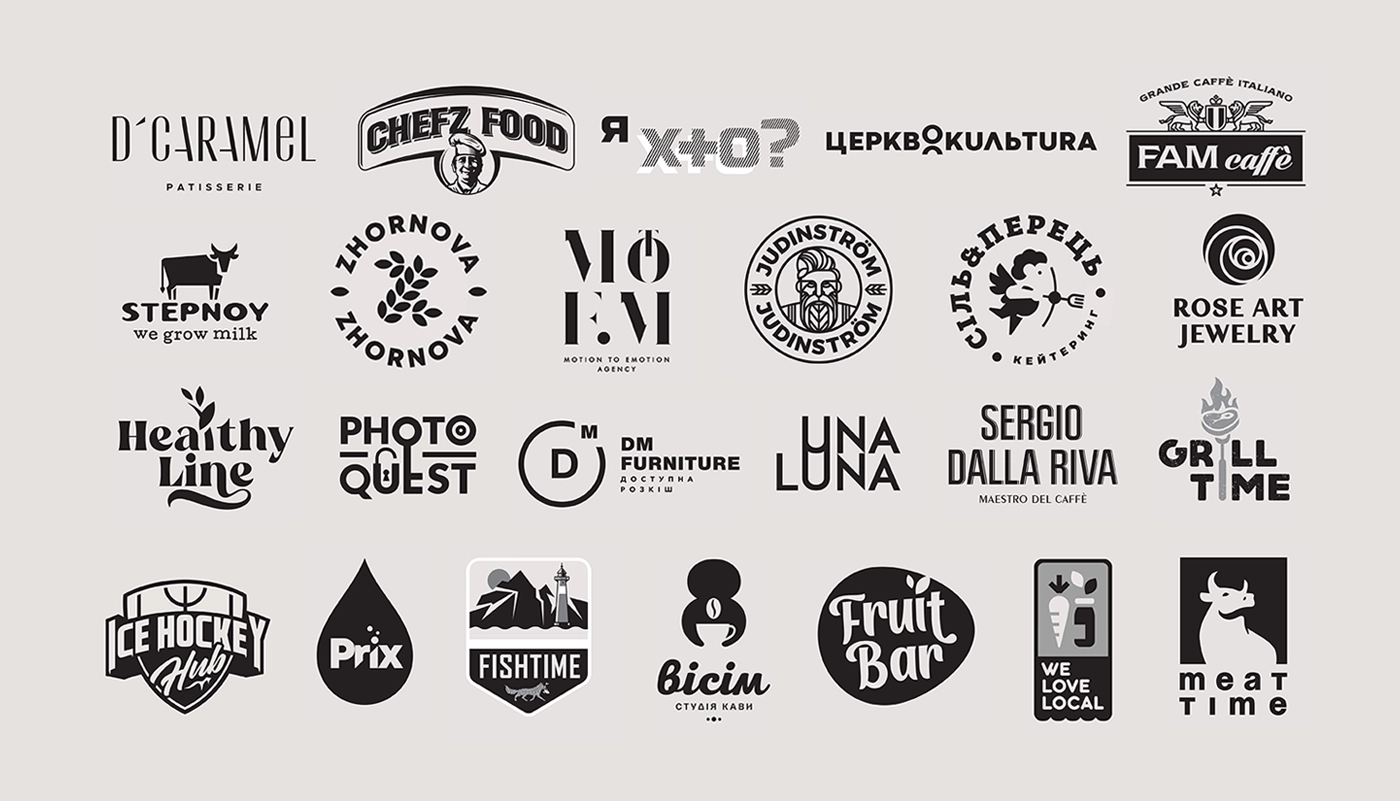
Type of mark. A wordmark set in a licensed font costs less than custom lettering. An illustrated mark, like the Fishtime logo with its mountains and lighthouse in our Logo Collection vol. 01, takes more drawing time and more testing at small sizes.
File set and versions. A single PNG is cheap to deliver. A full set of vector files, color versions, and lockups takes a day of careful production work.
Rights. A low price sometimes means the designer keeps the copyright or uses stock elements you cannot own. A contract that assigns all rights to you is part of the price.
Deadline. A logo needed in four days costs more than the same logo in three weeks, because other work has to move.
Experience in your category. A designer who has done twenty food brands knows what a grocery shelf does to a mark. That knowledge saves revision rounds, and it is priced in.
Why a logo for a packaged product costs more to get right
Many logo price guides are written for service businesses: a law firm, a dental practice, a startup app. Their logo lives on a website, a business card, and a sign. A CPG logo has a harder job, and the extra work shows up in the scope.
It has to work tiny. On a spice jar, a lip balm, or a bottle cap, the logo can end up less than half an inch wide. Thin lines close up, small counters fill with ink, and taglines disappear. Every concept should be checked at its smallest real size before anyone approves it.
It has to work in one color. Packaging production often limits color: a foil stamp, an embossed lid, a black-only carton, a laser-etched glass bottle. A logo that only works in a gradient fails the first time a supplier asks for a single-color file.
It has to sit on many backgrounds. A product range uses a different color for each flavor. The logo has to read on red, on green, on kraft paper, and on a photo of the product.
It has to fit the package shape. Tall bottles need a stacked version, wide boxes need a horizontal one, and round lids need a mark that works in a circle.
It has to read as a thumbnail. On Amazon and in grocery delivery apps, the first image a shopper sees is often a small thumbnail, an inch or two across on a phone. The brand name has to be legible at that size.
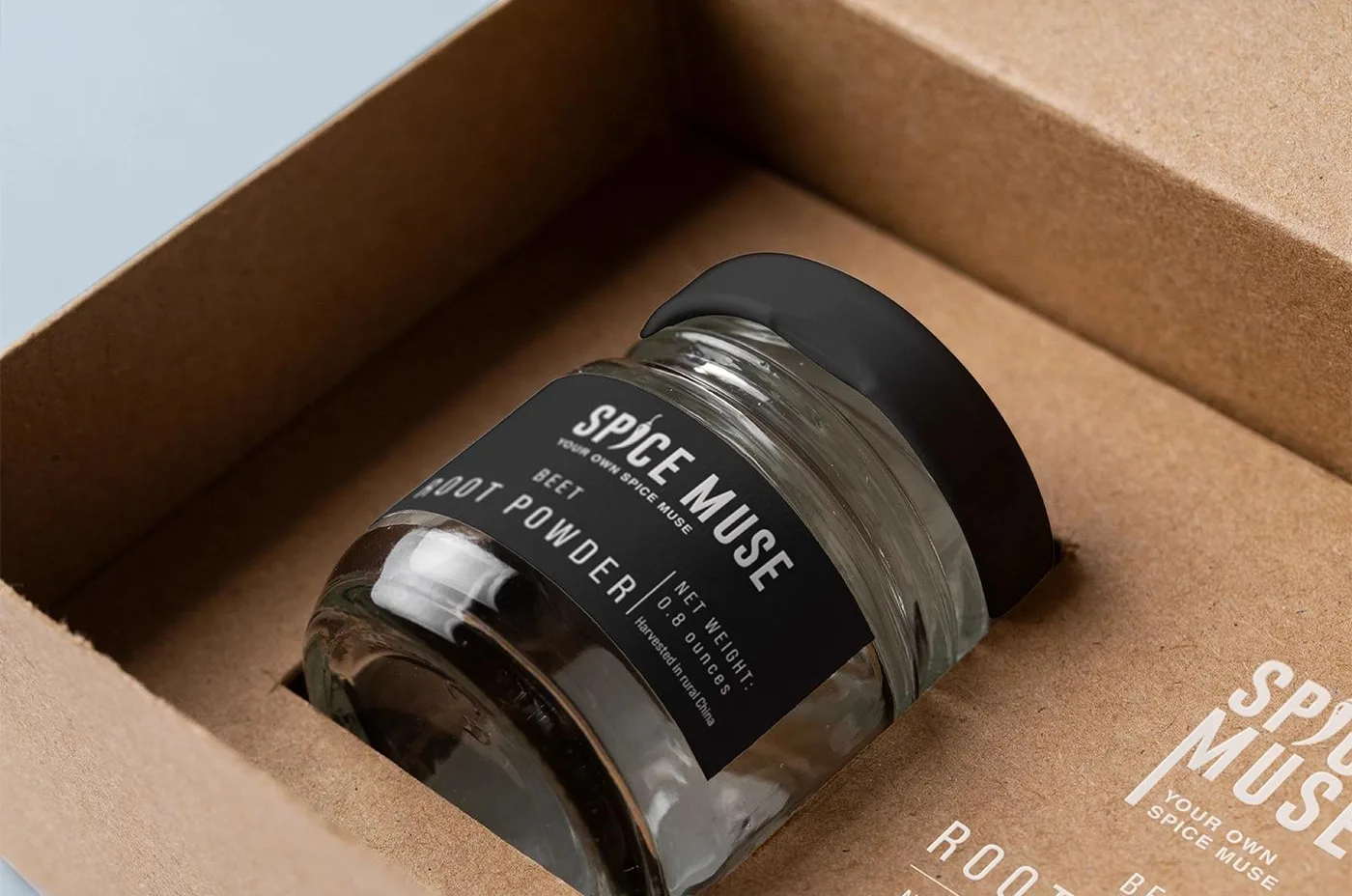
The Spice Muse logo is a good example. The brand sells premium spices, salts, and teas in glass jars, kraft bags, and cardboard tubes. The logo uses a custom typeface with a small chili pepper drawn into the letter “I,” and it is printed white and silver on matte black labels. It had to read on all three formats, at jar size, in a single light color on a dark ground. The candle brand Fire Muse had a similar brief: a subtle flame built into the lettering, gold on black, legible on six scents with very different names.
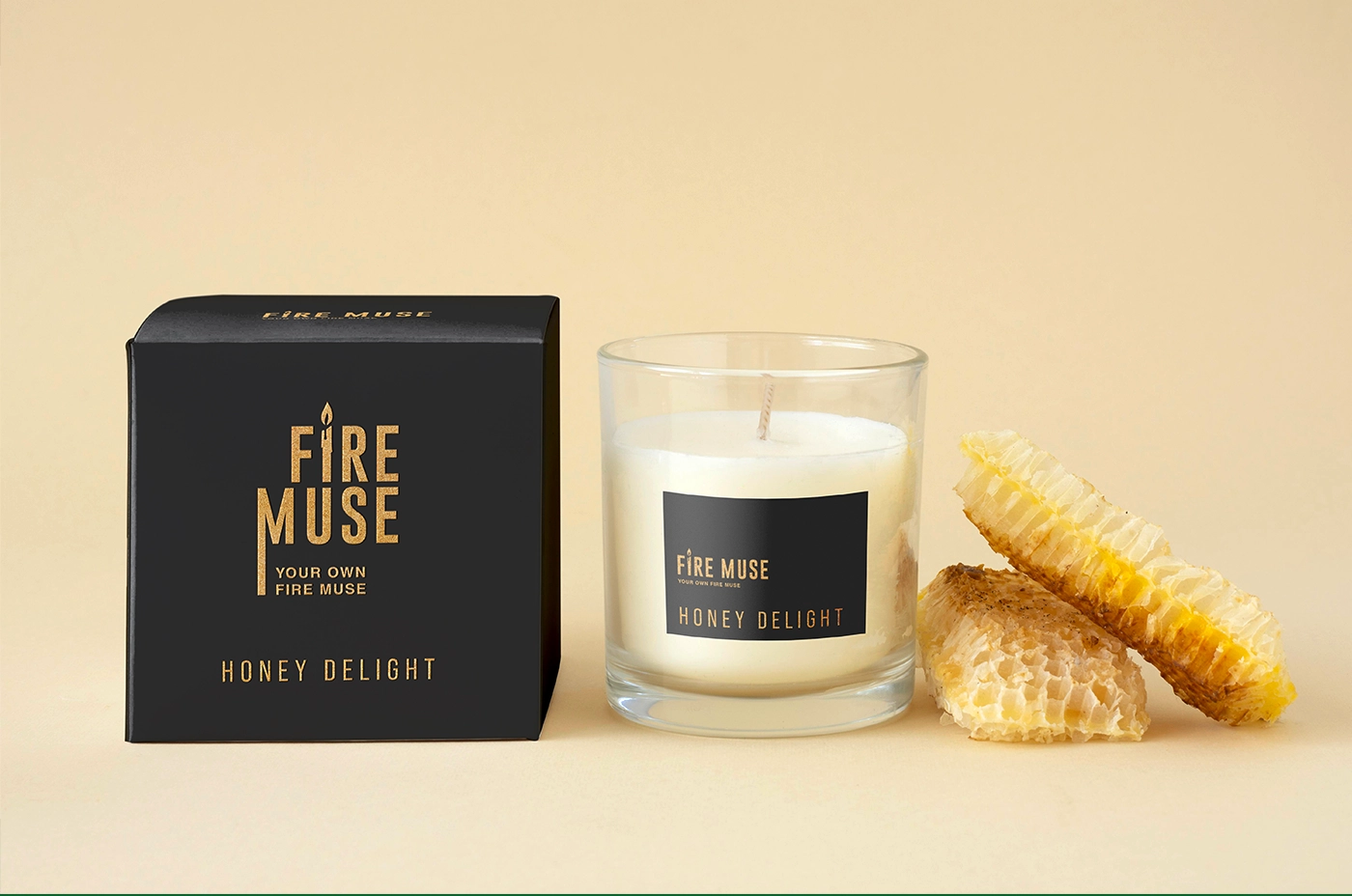
None of this costs much extra when it is part of the plan from the start. Fixing it later does. A cheap logo redrawn after the first packaging proof comes back from the printer means new artwork, new plates, and a delayed launch.
How big the logo can be on a food package
Founders often want the logo as large as possible. On food and drink packaging, the rules for the front panel set limits before design taste does, and a logo budget should account for them.
The principal display panel (the part of the pack a shopper sees on the shelf) has to carry the statement of identity, which is the common name of the food, such as “freeze-dried strawberry crisps.” Under 21 CFR 101.3 it must be in bold type and in a size “reasonably related” to the most prominent text on that panel (FDA’s labeling guide suggests at least half the size of the largest print). In practice, a giant logo next to a tiny product name invites a problem. Size the logo with that in mind.
The net quantity statement has its own rules: under 21 CFR 101.105 it generally sits in the bottom 30 percent of the principal display panel (the placement rule doesn’t apply when the whole display panel is 5 square inches or smaller), with a minimum type height set by the panel’s area. Seals for organic, non-GMO, or gluten-free certification often go on the front too, and they compete with the logo for attention.
So the logo for a food brand is designed to share the front panel with at least two required elements and often a few seals. That is one more reason to design it together with the first pack, or at least with a real front panel in hand. Our guide to food label requirements lists everything that has to appear on the package.
Wordmark, symbol, or mascot: how the type of logo changes the price
The kind of mark you choose changes the hours behind it, and some kinds suit packaging better than others.
| Type of logo | What it is | Effect on price | On a package |
|---|---|---|---|
| Wordmark | The brand name in a chosen or adjusted typeface | Lowest, if set in a licensed font; higher with custom lettering | Reads well on a front panel; needs a short name to stay legible on a lid |
| Lettermark or monogram | Initials or a single letter | Low to medium | Good as a secondary mark on caps, seals, and stickers |
| Symbol | A picture or abstract shape without words | Medium to high: more drawing and more testing | Strong for recognition, but a new brand rarely gets away with a symbol alone |
| Combination mark | Symbol and name together, in fixed lockups | Medium to high | A common choice for food and drink brands, because each part can work alone |
| Emblem | Name inside a badge or seal | Medium | Classic on beer, coffee, and bakery goods; detail gets lost at small sizes |
| Mascot or character | An illustrated character | Highest: drawing, poses, expressions | Memorable on kids’ and snack products; expensive to keep consistent |
For most new product brands we recommend a combination mark: the name carries the brand on the front panel, and the symbol can stand alone on a cap, a seal sticker, or a social media avatar. A custom-drawn wordmark is the other strong option when the name is short and distinctive. Both are safe bets.
When a cheap logo is the right decision
A low-cost logo isn’t always a mistake. It makes sense in a few situations:
- You are testing a product idea at a farmers’ market or with a small online audience, and you’ll rebrand if it works.
- The product will be sold under a retailer’s or distributor’s brand, and your own name only appears on invoices.
- You plan to hire a designer within a few months and need something on a website now.
In each case, treat the cheap logo as temporary, and don’t print large runs of packaging with it. The moment you sign a retail deal or order a sizable first production run (say, 5,000 units), the cost of changing the logo later becomes larger than the cost of a proper one now. Then the math flips.
Five tests to run on any logo before you pay the final invoice
You don’t need design training to check a logo. Run these tests on the final concept, whoever designed it.
- The lid test. Print the logo at half an inch wide on plain paper. Can you still read the name?
- The one-color test. Ask for a black-only version. Does it still look like the same brand?
- The shelf test. Put the logo next to printouts of the three biggest competitors in your category. Does it stand apart, or does it blend in?
- The thumbnail test. Shrink a mock pack with the logo to thumbnail size on your phone, about an inch across. Is the brand name legible?
- The phone test. Say the brand name to someone over the phone and ask them to search for it. If they can’t find it, the problem may be the name, not the logo, and it’s better to know before you print.
A logo that passes all five is ready for packaging. A logo that fails two or more needs another round, and a good designer will expect you to ask for it, because these are the same checks a careful designer runs before handing over the files.
Logo, identity, or packaging: what to buy first
For a product brand, the logo is rarely the whole purchase. A useful way to think about the budget:
- Logo only ($1,500 at SOTDESIGN). Right when you already have a visual direction, or when you need a mark for a single product and will build the rest later.
- Corporate identity (from $1,500). Stationery and a guideline for colors, type, and layout, built on a logo you already have. Right for a business that needs a consistent look across documents and a website.
- Brand identity (from $5,000). Adds a full brand book. Right for a product range that will grow to several SKUs.
- Packaging (from $2,500). Includes the packaging system and SKU number one; further SKUs are priced in the estimate.
For a typical launch, a logo plus a pouch in three flavors starts with $1,500 for the logo and $2,500 for the packaging system with the first flavor, and the other two flavors are added in the estimate. The logo is the smaller part. Buying the logo and the packaging from the same team usually saves a revision round or two, because the logo is drawn with the pack already in mind. Our packaging design and label design (from $1,500) pages list what each service includes.
Hourly rate or fixed price
Designers price logos in two ways, and the difference affects your final bill more than the headline number.
An hourly rate looks transparent: you pay for the time spent. The risk sits with you, because every extra round, every new idea from a co-founder, and every slow week of feedback adds hours. A quote of “15 to 25 hours” can end anywhere in that range or above it. Fixed prices avoid that.
A fixed price moves the risk to the designer. The scope is written down (concepts, rounds, files, timeline) and the price doesn’t change as long as the scope doesn’t. This is how we work, and it is how many agencies price logos for small brands. The thing to check in a fixed quote is the scope itself: a low fixed price with one concept and one round is cheaper because it promises less.
If you get both types of quote, convert the hourly one into a likely total. Multiply the rate by the upper end of the estimate, add one extra round, and compare that figure with the fixed price.
Information a designer needs from you
The more a designer knows at the start, the more accurate the estimate and the fewer rounds you’ll need. Before you contact anyone, write down:
- The name, checked. Search the USPTO trademark database and the main marketplaces for the same or a similar name in your category. A logo can’t fix a name someone else already owns.
- The product and where it sells. Grocery, specialty retail, Amazon, your own website, farmers’ markets. Each channel puts the logo at a different size.
- Every place the logo will appear. Pack front, lid, seal sticker, shipping box, website, social profile, delivery van.
- Three competitors. The brands a shopper will see next to yours. The designer needs to know what to stand apart from.
- What you already have. A color customers know, an old logo with some recognition, a font you like.
- What you don’t want. Colors, symbols, or styles that are off the table, and why.
- Budget and deadline. A real number and a real date help a designer suggest the right scope.
- Who decides. If three partners must approve, say so. It changes how concepts are presented.
Our brief asks about all of this, so you can use it as a checklist even if you hire someone else.
How much a logo redesign costs
If you already sell a product, the question is often a redesign, and the price works differently.
A refresh keeps the existing mark and tightens it: cleaner lines, a better typeface, a version that works at small sizes. It usually costs less than a new logo because the direction is already set, and it keeps the recognition you’ve built. When we redesigned the ZEBRA varnish line, the logo stayed with small adjustments and the work went into the packaging system around it.
A redesign replaces the mark. It costs about the same as a new logo in design fees, but the larger cost is the rollout: every package, label, and listing has to change, and old stock has to sell through first. The Prix air freshener rebrand is an example where the logo and the packaging changed together, so the new mark appeared on shelves in one move.
Before choosing, ask what your customers actually recognize. If they find you by a color or a shape on the pack, a refresh protects that. If the old logo is holding the brand back in a new channel, a full redesign is worth the rollout cost. Our rebranding checklist walks through that decision step by step.
The costs that come after the logo
The design fee is not the last bill. Plan for these as well.
Trademark clearance and filing. Before you print 10,000 pouches, check that no one else holds a similar mark for similar goods. The USPTO base application fee is $350 per class of goods since January 18, 2025, with surcharges for missing information or free-form descriptions of goods (USPTO summary of the 2025 trademark fee changes). Many brands also pay a trademark attorney for the search and filing. A designer can tell you whether a mark looks too close to a competitor’s, but a legal clearance is a lawyer’s job.
Production files for packaging. Printers ask for specific formats: outlined fonts, spot colors, a version without fine detail for flexographic printing. If the logo package didn’t include them, someone has to make them.
Updates later. A logo designed for one product may need a symbol or a simpler version when the range grows. Agencies usually quote this as a small separate job.
Redoing a weak logo. This is the largest hidden cost. Changing a logo after launch means new printing plates, new labels, new listings, and a period when old and new packs sit on the same shelf. A $100 logo that has to be replaced after the first production run is the most expensive option in this guide.
AI-generated logos: the cost you don’t see on the invoice
AI logo tools are fast and cheap, and for a test product they can be enough. Two risks matter for a brand that plans to sell in retail.
The first is ownership. The U.S. Copyright Office’s position is that material generated by AI without sufficient human authorship cannot be registered for copyright (Copyright Office, AI guidance). A trademark registration is a separate question, but a mark without copyright protection gives you fewer tools against copycats.
The second is similarity. Generators work from patterns they have seen many times, so they can produce generic shapes: leaves for natural products, drops for drinks, chef’s hats for food. Some of those may already be registered by someone in your category, and a trademark search is the way to find out before your customers do.
How to compare logo quotes
When you have two or three estimates on the table, check these points before you look at the price.
- Number of concepts and revision rounds. Written down, not “as many as needed.”
- File list. Vector formats (AI, EPS, SVG, PDF) and raster formats (PNG, JPG), plus color, one-color, black, and white versions.
- Versions. Horizontal, stacked, symbol only.
- Rights. The contract assigns all rights to you on final payment, and the designer confirms there are no stock elements in the mark.
- Timeline. A date for the first concepts and a date for the final files.
- What happens after round three. The hourly rate or fee for extra work.
- Category experience. Photos of their logos on real products, on shelves or in hand.
If a quote leaves out the file list or the rights, ask before you sign. Those are the two things that most often turn a cheap logo into an expensive one, usually at the moment a printer asks for a vector file or a retailer asks who owns the mark. A clear packaging design brief helps here too: designers quote more accurately when they know every place the logo has to work.
How we price a logo at SOTDESIGN
Our logo price is fixed at $1,500 because most of the work is the same for every brand: research, three concepts, three rounds, and a complete file set. The content changes from brand to brand. The price doesn’t. We send the estimate and the timeline within 1–2 business days after we read the brief.
We are a design-only agency based in New York, and we work with product brands across the US. Over ten years we’ve designed more than 450 projects for more than 55 brands, and more than 80 of those projects are packaging. Our logo collection includes marks that went straight onto products, like the cow symbol for the Stepnoy dairy brand and the droplet for the Prix air freshener line. We don’t print or manufacture anything; you get print-ready files that any printer can use.


If your logo will end up on a shelf, it makes sense to talk to a packaging design company from the start, so the mark and the pack are designed for each other.
ready to design your logo?
three concepts, three rounds, every file you need · design only · fixed estimate in 1–2 business days
get quoteFAQ
01 How much should a small business pay for a logo?
It depends on where the logo will be used. In our view, a service business with a website and business cards can often get by with $500 to $2,000. A product brand that will print the logo on packaging should budget around $1,500 or more for the logo, because it has to pass small-size and one-color tests that a website logo never meets.
02 Is $1,500 too much for a logo?
For a business that sells physical products, $1,500 is a mid-range price. It covers research, three concepts, three revision rounds, and a full file set. Cheaper options exist, but they usually drop the research, the testing, or the vector files, and those are the parts that cost the most to fix later.
03 How long does logo design take?
Our logo package takes up to 13 days from an approved brief. How quickly feedback comes back makes the biggest difference. Contest platforms can deliver faster because many designers work in parallel.
04 Do I own my logo after I pay for it?
You should. Ask for a contract that transfers all rights to you on final payment and confirms the mark contains no stock or licensed elements. Without that, the designer may still hold the copyright.
05 Can I trademark a logo made with AI?
Trademark law doesn’t require human authorship the way copyright does, but whether any mark can be registered depends on many factors, from distinctiveness to conflicts with existing marks. Copyright is the harder part: the U.S. Copyright Office won’t register material generated by AI without sufficient human authorship. Talk to a trademark attorney before you build a brand on a generated mark.
06 Why do logos cost so much?
Most of the price is time that the client never sees: research into the category, sketches that don’t make it into the presentation, testing at small sizes, and the production of dozens of files. A logo that looks simple often took the longest, because every curve has to hold up at half an inch wide and on a billboard.
07 Is a logo a one-time cost?
The design fee is paid once. Small follow-up jobs are common, though: a simplified version when the range grows, a seasonal variant, or production files for a new printer. Ask how the designer prices those before you sign, so they don’t come as a surprise.
08 Should I get a logo before packaging design?
Ideally you get them together, or the logo first with the packaging already planned. A logo designed without knowing the pack often needs a second round of work when the first label comes back from the printer.
09 What files should I receive with my logo?
Vector files (AI, EPS, SVG, and PDF) for printing and production, and raster files (PNG and JPG) for websites and social media. Each should come in full color, one color, black, and white, in horizontal and stacked versions.