Line Extension vs Brand Extension: How to Package a New SKU
A line extension is a new version of a product you already sell, in the same category and under the same brand: a new flavor, size, format, or recipe. A brand extension takes your brand name into a different category, like a baking soda brand that starts selling toothpaste. The difference matters because it decides how much of your existing packaging you can reuse and how much new design work and risk the launch brings.
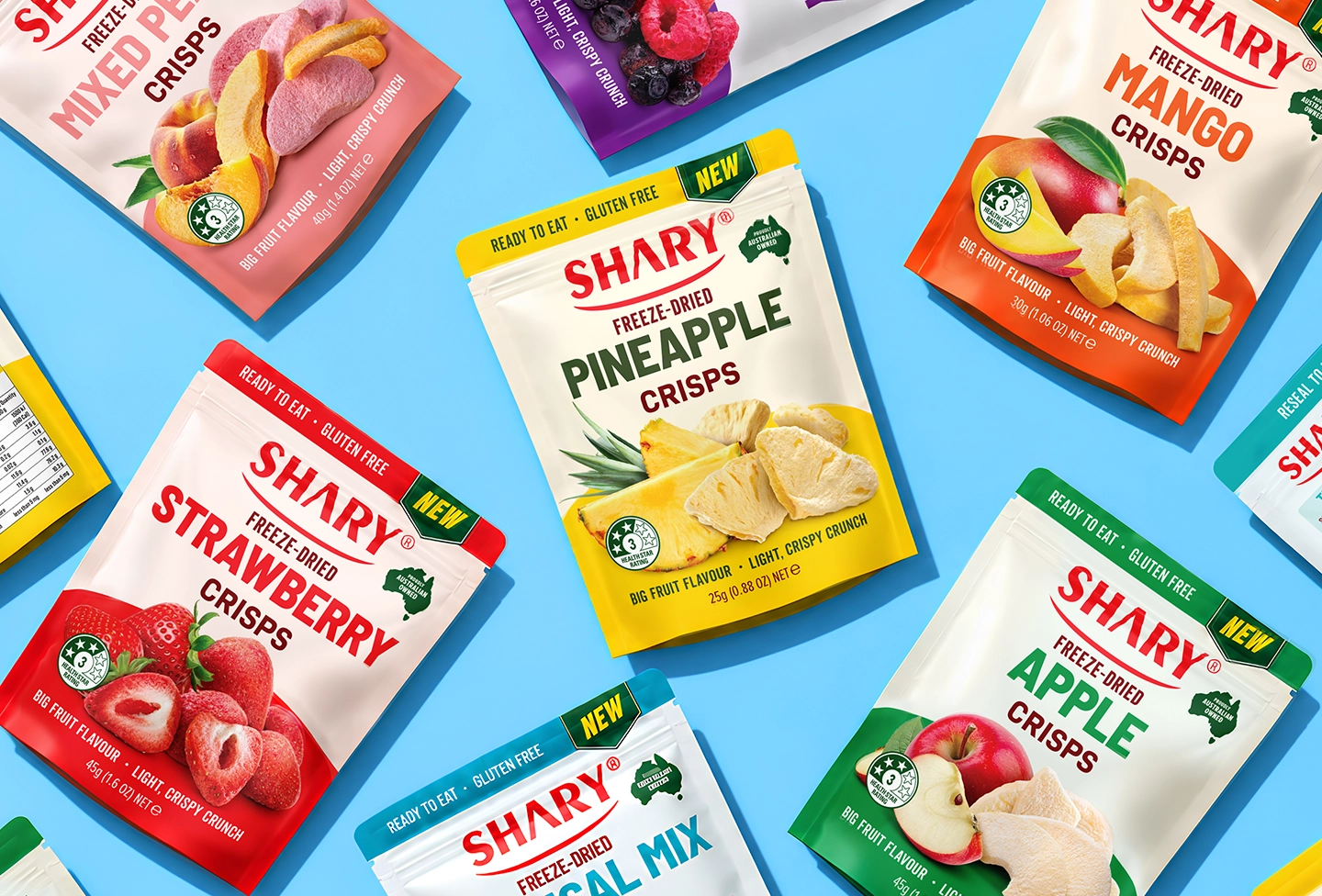
For packaging, a line extension is mostly a system question. The new SKU should look like part of the family, so shoppers trust it, and still be different enough that nobody grabs the wrong one. A brand extension is closer to a new launch. The brand assets come along, but the pack has to follow the rules of a new shelf, where buyers expect different formats and colors.
At SOTDESIGN, adding a SKU to an existing packaging system is about $800 per SKU, while a new system starts at $2,500.
The difference at a glance
| Line extension | Brand extension | |
|---|---|---|
| What changes | Flavor, size, format, recipe, or tier within the same category | The category itself |
| Example | A chip brand adds a jalapeño flavor | A chip brand launches a salsa |
| Who it’s for | Mostly current buyers who want variety | New buyers in a new aisle, plus fans of the brand |
| Main risk | Cannibalizing your own sales, crowding the shelf | Stretching the brand where it isn’t credible |
| Packaging job | Fit into the existing system with a clear variant code | Carry the brand into a new category’s conventions |
| Typical design cost at SOTDESIGN | About $800 per added SKU | Often a new system: from $2,500 |
Both moves spend the same asset, the trust people already have in your name. A line extension asks your current buyers to try one more thing from you. A brand extension asks people in a different aisle to believe your name means something there too.
Common types of line extensions
- Flavor or scent. The classic move. Doritos Cool Ranch and Golden Oreo are both line extensions. On the pack this is a color and a name inside a fixed layout.
- Size and count. Single-serve, family size, club packs, multipacks. The product stays the same, so the design job is mostly about the format and reading the count at a glance.
- Format. Bite-size packs from a cookie brand, single-serve pods from a coffee brand, a spray version of a cleaner. The packaging shape changes, so the system has to stretch.
- Recipe or dietary version. Low sugar, gluten-free, organic, high protein. These often need claims on the front, and every claim has to meet the rules behind it.
- Tier. A premium or value line under the same brand. Here the design has to show the step up or down without making the core product look cheap.
- Seasonal or limited edition. Holiday flavors, collaborations, short runs. These can break the system on purpose, but they still need the brand block in its usual place.
Coca-Cola is the textbook case for dietary versions. Diet Coke and Coke Zero Sugar are both line extensions of the Coca-Cola brand, and each got its own color code so shoppers can tell them apart in a cooler.
Common types of brand extensions
Brand extensions usually work when the new category connects to something the brand already stands for.
- Same ingredient, new use. Arm & Hammer is the example most marketers know. A baking soda brand moved into toothpaste, laundry detergent, and cat litter, and each step made sense because baking soda already meant “cleans and absorbs odors.”
- Companion product. A pasta brand that launches sauce, a coffee brand that launches creamer, a chip brand that launches dips. The products are used together, so buyers find the link easy to accept.
- Same benefit, new category. A brand known for clean ingredients or for protein moves into a new snack type, and the promise comes along with it.
- Lifestyle or license. A brand puts its name on merchandise or on a product made by a partner. For a small CPG company this is often the riskiest kind, because quality depends on someone else.
The famous failures are the ones where the link was missing. The best-known story, Colgate frozen dinners, is mostly legend: the lasagna in viral photos was never sold. What Colgate did test, back in 1964, was a short-lived line of dried “Colgate Kitchen” entrees, pulled within about a year. The lesson people draw from it still holds. A toothpaste name on food makes shoppers think of toothpaste.
Risks on both sides
Line extension risks. Too many variants split your sales without adding new buyers. You may need more shelf space than the retailer will give you, and grocery chains often charge slotting fees for each new item. Every SKU adds inventory, a new label, and another production run. On the shelf, a line with fifteen flavors in near-identical packs can make it harder to find any of them.
Crystal Pepsi in the early 1990s is a case where the extension itself confused people. It was a clear cola, and shoppers weren’t sure what it was supposed to taste like.
Brand extension risks. If the new product disappoints, the damage can travel back to your core product. If the category is far from what you’re known for, the name helps less than you expect, and you pay for a launch that works like a new brand anyway. And a new category comes with its own rules, retailers, and price points that your team may not know yet.
How to decide which one you need
- Do current buyers want more from you? If reviews, retailer feedback, or sales data show people asking for a new flavor or size, a line extension is the cheaper and safer answer.
- Is your aisle full, or are sales flat? If you already have the shelf space you can get and growth has slowed, a brand extension can open a new aisle.
- Does your name mean something in the new category? Write down what your brand promises in one sentence. If that sentence makes sense next to the new product, the extension has a chance. If you need a second sentence to explain the link, consider a new brand.
- Can you make it well? A brand extension made by a co-packer you haven’t worked with yet puts your main product’s reputation in that partner’s hands.
- Will the retailer take it? Buyers at grocery chains look at velocity per SKU. A new flavor competes with your own items for space; a new category competes with established brands.
Many brands do both over time. They extend the line until the system and the shelf are full, then extend the brand into a related category that their buyers already use.
How to design packaging for a line extension
A line extension succeeds on the shelf when it’s obviously yours and obviously different. That needs a system, ideally built before the first SKU ships.
Keep the brand block fixed
The logo, its size, and its position should not move between variants. Shoppers find your brand by shape and placement before they read anything.
Pick one variant code and stick to it
Most brands use color for flavor or type, plus the variant name in large type. If color carries the flavor, plan the palette for the flavors you’ll add later, so you don’t run out of distinct colors by SKU nine. Our snack packaging guide goes into flavor color systems in more detail.
Reserve zones for what changes
Decide in advance where the flavor name, the claim badge, the count, and the image sit. When a new SKU comes, the designer fills the zones instead of redesigning the pack.
Make tiers read as tiers
A premium line can use a different finish, a darker base, or foil, while the logo and layout stay. A value line can simplify. The relationship to the core product should be visible from a distance.
Plan the paperwork
For food, each new flavor or recipe needs its own ingredient statement and, unless the product qualifies for an FDA small business exemption, its own Nutrition Facts panel. Each variant and each pack size also gets its own barcode. GS1’s GTIN Management Standard lists when a product change needs a new GTIN, and a new flavor or a new net quantity is one of those cases. Put the barcode, the panel, and the required statements into the system template so they land in the same place every time.
Check it in a lineup
Print the new SKU next to the existing ones at real size, or put them in a shelf mock-up. If two variants look the same from six feet away, change the color or the variant zone. A new name alone won’t fix it.
How to design packaging for a brand extension
A brand extension carries fewer pieces of the old system and borrows more from the new category.
Start with the brand relationship. The new product can carry the master brand on its own (“Brand Dips”), use a sub-brand with the master brand as an endorsement (“Dip Co. by Brand”), or launch under a new name. The more distant the category, the more sense the endorsed or new-name option makes.
Carry over the distinctive assets. The logo, a signature color, a pattern, or a character usually travel well, while the layout often has to change. A chip bag layout on a glass jar of salsa will look out of place.
Then learn the new aisle’s conventions. Every category has its own formats and required information, and its own shorthand for “premium” and “natural.” Break the conventions on purpose, if you want to stand out, but know which ones you’re breaking.
Before you print, test recognition. Show the new pack to people who know your brand and to people who don’t. The first group should connect it to you; the second should understand what the product is without the brand name.
Budget it like a launch, too. A brand extension usually needs a new packaging system and often a new structure and new photography.
adding flavors or a new product?
send us your current packs and the new SKUs: one system for all of them, fixed estimate in 1–2 business days
get quoteThree multi-SKU projects from our work
WineTime Seafood is a premium frozen fish and seafood line with more than ten products, from wild dorado and salmon to scallops, octopus, and tiger shrimp. The client wanted one strong identity across the whole range, with each SKU still easy to recognize. The system uses a deep blue base for every pack, with the product changing inside a fixed structure. New products drop into the same layout.
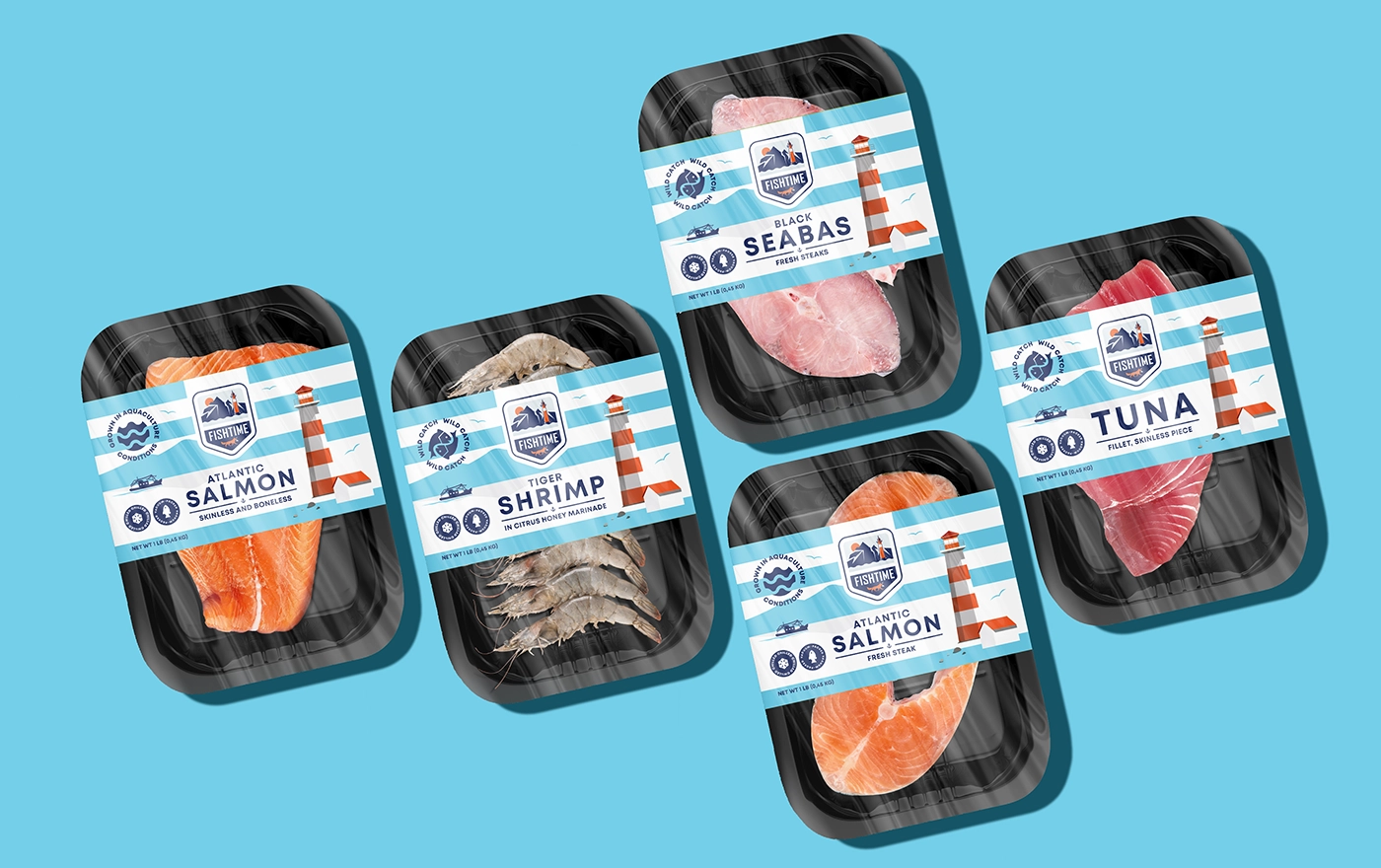
Fishtime had a larger range, over twenty frozen fish and seafood products, and needed packaging that read as trustworthy and fresh at a glance. We built one graphic concept around a lighthouse against fjords and calm water, so the range holds together on a long freezer shelf while the product names and images separate the SKUs.
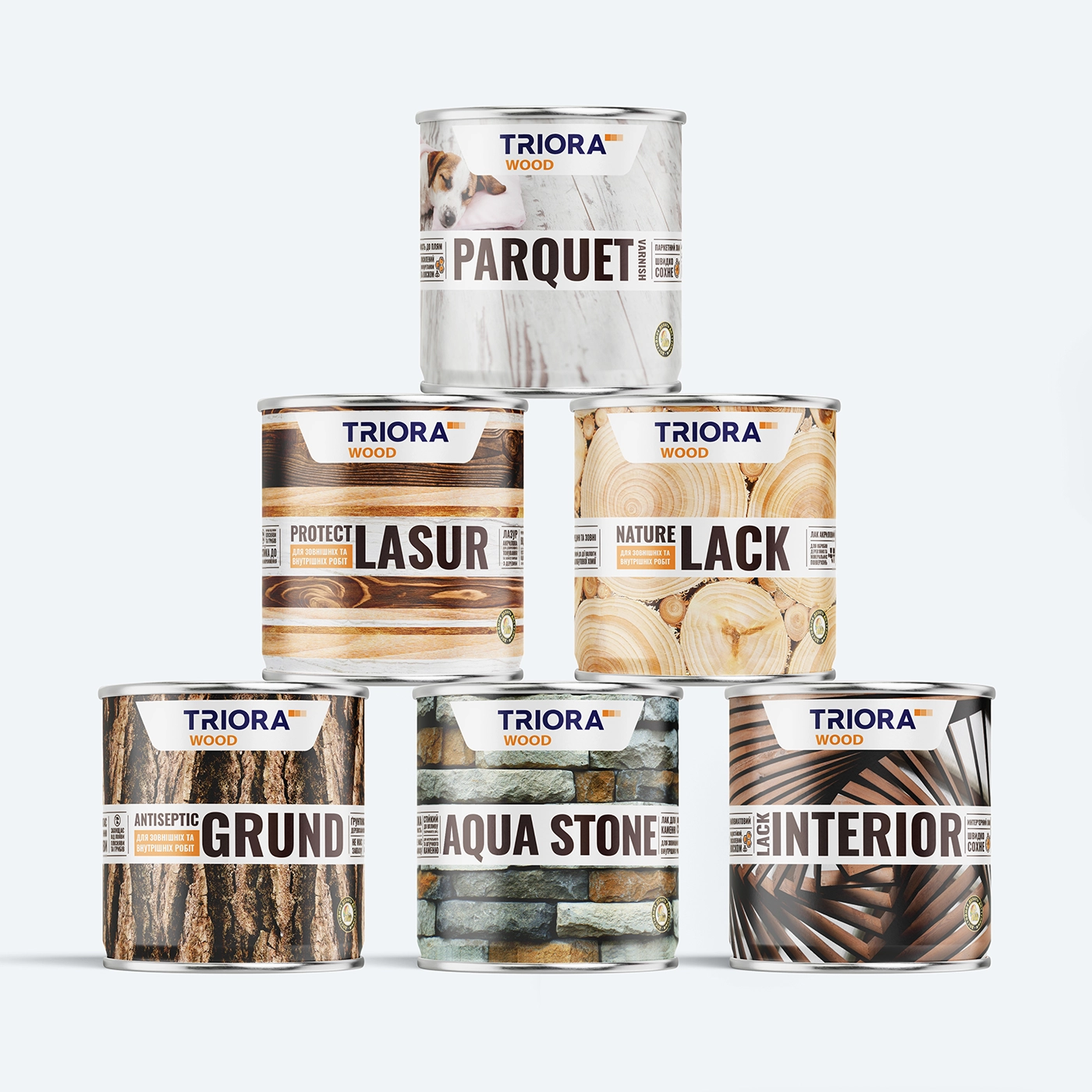
TRIORA WOOD is outside food, a line of premium acrylic coatings for wood and mineral surfaces with several subcategories. The task was to keep the line consistent and also set it apart from the company’s other trademarks on the same shelf. We used real material imagery, a strict type hierarchy, and icon-based infographics, so each subcategory has its own recognizable look inside one system.
What a new SKU costs to design
The cost depends mostly on whether the new product fits an existing system or needs a new one. Our guide to packaging design costs covers the full ranges.
Through our packaging design services, a new packaging system with its first SKU starts at $2,500. Once the system exists, each additional flavor, size, or variant is about $800, because the designer adapts a structure that’s already worked out. Three new flavors for an existing line come to about $2,400. A brand extension into a new category usually needs its own system: a new product with three variants is about $4,100 ($2,500 + 2 × $800), and a logo for a new sub-brand adds about $1,500, so about $5,600 in total. From ten SKUs up, a volume discount applies. For a new system you see three concepts and get three rounds of revisions. Send us the list of products, and the fixed estimate comes back in 1–2 business days. If you’re preparing one, our guide to writing a packaging design brief lists what to include.
SOTDESIGN is a design studio in Albany, New York, working with consumer brands across the US. We’ve done 80+ packaging projects over 10+ years. We don’t print or manufacture, so the files are built on your supplier’s dielines and go to whatever printer you use.
ready to extend your line?
new flavors, sizes, or a new category: design only, any printer
get quoteFAQ
01 What is the difference between a line extension and a brand extension?
A line extension adds a new version of an existing product in the same category, such as a new flavor, size, or format. A brand extension uses the existing brand name to enter a different category. A line extension mainly reaches current buyers; a brand extension tries to win buyers in a new aisle.
02 What is an example of a line extension?
A new flavor of an existing snack, a family-size pack of a cereal, a sugar-free version of a soda, or single-serve pods from a coffee brand. Golden Oreo and Diet Coke are well-known examples.
03 What is an example of a brand extension?
Arm & Hammer moving from baking soda into toothpaste, laundry detergent, and cat litter. Each new category connects to what baking soda already meant to buyers: cleaning and odor control.
04 What are the disadvantages of a brand extension?
It can weaken the original brand if the new product disappoints, it costs nearly as much as a new launch when the categories are far apart, and the brand name may not help in a category where buyers don’t connect it with anything.
05 What are the disadvantages of a line extension?
Variants can take sales from each other without bringing in new buyers, each SKU adds inventory and production costs, retailers may charge slotting fees, and too many similar packs make the shelf confusing.
06 Does each new flavor need its own UPC?
Yes. Under the GS1 GTIN Management Standard, a new flavor counts as a new product, and any change to the declared net quantity (a 12 oz bag next to an 8 oz one) also needs a new GTIN, which is the number behind the UPC barcode.
07 How much does it cost to design packaging for a new SKU?
At SOTDESIGN, adding a SKU to an existing packaging system costs about $800. If the new product needs its own system, as most brand extensions do, it starts at $2,500, plus about $800 for each additional variant.