Beverage and Beer Label Design: A Practical Guide
A beverage label has to stand out in a cooler or on a shelf from a few feet away, survive condensation, ice, and handling without peeling or smearing, and carry the information the law requires for your type of drink. That last part depends on who regulates the product. Most non-alcoholic drinks follow FDA food labeling rules. Beer made with malted barley and hops is a malt beverage under the Alcohol and Tobacco Tax and Trade Bureau (TTB), with its own required statements, a government health warning, and, for beer sold across state lines, label approval before it ships.
Good beverage labels start with that split, then build a system: one layout that works on a 12 oz can, a 16 oz can, a bottle, and a four-pack carrier, with a clear way to tell styles or flavors apart. A brewery that adds a seasonal release every few months, or a juice brand that grows from three flavors to ten, saves time and money if the label system is planned for that from the start.
At SOTDESIGN, label design starts at $1,500, and a full label system begins at $2,500, which covers the design system and the first label. Each extra style or flavor adds about $800. This guide covers who regulates what, the required label content for beer and for non-alcoholic drinks, materials and printing, design for the cooler, series systems, and five of our beer projects.
Who regulates your drink
Before anyone designs anything, find out which agency’s rules your label follows. It changes what has to be on the label and whether the label needs approval before you sell.
| Drink | Labeling rules | Label approval before sale |
|---|---|---|
| Juice, soda, water, tea, coffee drinks, energy drinks sold as beverages | FDA (food labeling) | No |
| Beer made with malted barley and hops | TTB (malt beverage rules) | COLA if sold across state lines |
| Beer made without malted barley or without hops, such as sorghum-based gluten-free beer | FDA (food labeling) | No |
| Hard seltzer | TTB if malt-based or spirits-based; FDA if made from fermented sugar and under 7% alcohol | COLA for malt-based and spirits-based products sold across state lines |
| Kombucha | FDA below 0.5% alcohol; may fall under TTB at 0.5% or more | Depends on alcohol content and base |
| Wine under 7% alcohol | FDA | No |
| Wine at 7% or more, distilled spirits | TTB | COLA, or a certificate of exemption if sold only in the state where bottled |
This table is a simplified starting point. FDA-regulated drinks at 0.5% alcohol or more still carry the government health warning. Products near the lines, such as kombucha, non-alcoholic beer, or drinks with unusual bases, are worth checking with TTB or a beverage attorney before you lock the label.
What a beer label must include
For a malt beverage under TTB rules, the label has to show (TTB: malt beverage mandatory label information):
- Brand name.
- Class and type designation, such as “Ale,” “Lager,” or “India Pale Ale,” or a statement of composition for flavored or unusual products.
- Name and address of the brewer or bottler, or the importer.
- Net contents, such as “12 FL. OZ.” Net contents can also be blown or embossed into the container.
- Alcohol content, when the beer gets alcohol from added flavors or other nonbeverage ingredients that contain alcohol. Otherwise federal rules make it optional, but some states require it, and most craft drinkers expect to see it.
- Declarations of FD&C Yellow No. 5, cochineal extract or carmine, sulfites, and aspartame, if the beer contains them.
- Country of origin for imported beer.
Mandatory information has to be in English, except the brand name. Information placed only on the bottom of a can, on a cap, or on a shrink capsule doesn’t count toward the requirements, so plan the main panels with that in mind.
The government health warning
Every alcoholic beverage with 0.5% alcohol by volume or more sold in the US carries the same health warning, word for word (TTB: malt beverage health warning). Designers often underestimate how much space it takes.
- “GOVERNMENT WARNING” must be in capital letters and bold. The rest of the statement may not be bold.
- Minimum type size is 1 mm for containers of 237 ml (8 fl oz) or less, 2 mm for containers over 237 ml up to 3 liters, and 3 mm for larger containers.
- There’s a limit on how tightly the text can be set: no more than 40 characters per inch at 1 mm, 25 at 2 mm, and 12 at 3 mm.
- It has to be on a contrasting background, separate and apart from other information.
On a 16 oz can, a warning at 2 mm with no more than 25 characters per inch takes real room: the full warning is about 280 characters, so it needs at least 11 inches of text, for example five lines about 2.3 inches wide. Reserve that space in the first layout, before the art is approved.
Label approval (COLA)
A beer that contains malted barley and hops and is sold across state lines needs a Certificate of Label Approval from TTB before it ships. Beer sold only in the state where it’s brewed doesn’t need a COLA, though many states run their own label registration. TTB says simple approvals often come back in less than a week when no corrections are needed, and there’s no fee to apply online (TTB: label approval basics). Build the approval into the schedule anyway, and don’t send files to the printer until the label is approved.
Non-alcoholic beer
Beer under 0.5% alcohol by volume isn’t treated as an alcoholic beverage for federal tax purposes and doesn’t carry the government warning. The words “non-alcoholic” can be used only together with a statement that the product contains less than 0.5% alcohol by volume, and “alcohol free” is reserved for products with no alcohol at all. Non-alcoholic beer made with malted barley and hops is still a malt beverage under TTB labeling rules, so it needs a COLA if sold across state lines. It can’t be called “beer,” “ale,” or “lager” on the label; names like “non-alcoholic malt beverage,” “cereal beverage,” or “near beer” are used instead.
What’s still changing
In January 2025 TTB proposed two rules for beer, wine, and spirits: mandatory allergen labeling and an “Alcohol Facts” statement with alcohol, calories, and nutrients per serving. As of October 2026 neither is final. A separate ingredient labeling proposal was withdrawn in March 2025. Check the status of both rules before your next print run, and leave room on the back panel in case they’re finalized.
planning a beer or beverage line?
labels for cans, bottles, and carriers in one system, quoted before any design starts
get quoteWhat a non-alcoholic beverage label must include
Juice, soda, sparkling water, ready-to-drink tea and coffee, and most energy drinks follow FDA food labeling rules. The basics are the same as for any packaged food: a statement of identity, net quantity in both US and metric units, an ingredient list, allergens, Nutrition Facts, and the company’s name and address. Our guide to food label requirements explains each part. Drinks add a few rules of their own.
Juice content. If the label suggests the drink contains fruit or vegetable juice, through words, pictures, the name, or even color and flavor, the percentage of juice has to be declared near the top of the information panel, such as “Contains 10% juice” (21 CFR 101.30). A drink with a big photo of oranges and 5% juice still has to say 5%.
Naming. If a drink with less than 100% juice uses the word “juice” in its name, the name needs a qualifier such as “beverage,” “drink,” or “cocktail,” for example “grape juice drink” (21 CFR 102.33).
Beverage or supplement. Energy drinks and functional drinks can be sold as conventional beverages with Nutrition Facts or as dietary supplements with Supplement Facts. The choice affects what claims you can make and what the label looks like, so settle it before design. The label format has to match how the drink is packaged and marketed: a drink sold like a soda is a conventional food and needs Nutrition Facts.
Designing for the cooler and the shelf
Drinks are often bought from a cooler door, and cooler doors are hard on labels. Glass fogs, lighting is uneven, and shoppers see your can through a reflection from six feet away. Strong contrast and a simple silhouette help more than fine detail. Test the front by printing it small and looking at it from across the room.
Shoppers often see the six-pack or four-pack carrier before they see the can. Design the carrier and the can together, so the style or flavor reads the same on both. A carrier with a big flavor block and a can with a tiny flavor note will confuse people at the shelf.
Make the style or flavor easy to find. Beer drinkers look for “IPA,” “Stout,” or “Hazy,” and juice shoppers look for the flavor. Give it a fixed place and size across the line. Alcohol content matters to beer buyers too, so even when federal rules make it optional, many breweries show it on the front.
Think about how the can or bottle will be held. On a can, the panel facing the shopper on the shelf is only about a third of the wrap. The brand and style have to be visible on that third, and the rest of the wrap can carry the story, the warning, and the required details.
Label types and printing
Pressure-sensitive labels are the most common choice for craft breweries and small beverage brands. They come on rolls, go on with a labeler, and work on cans and bottles. For anything that sits in ice or a cooler, choose a film face stock, such as BOPP, with a water-resistant adhesive. Paper labels can wrinkle and peel when wet, though some coated papers handle short contact with water.
Shrink sleeves cover the whole can or bottle with printed film. They give you 360 degrees of design, work well for short runs on blank cans, and can carry bold graphics edge to edge. Leave room for the shrink distortion around the shoulders and neck when you design, because the art stretches in those areas.
Printed cans look the cleanest and hold up best, but can makers usually require large minimum orders. Many breweries start with labels or sleeves on blank cans and move to printed cans once a beer sells steadily.
A few production details to settle early:
- Ask the printer for the exact dieline for your can or bottle size, and design to it.
- Plan for bleed and a safe area so text doesn’t fall into the seam or the curve of the bottle.
- If you want metallic ink, a matte varnish, or a clear label with a “no label” look, choose the label stock first, since each effect depends on it.
- Proof colors on the actual material. A brand color on white film, clear film, and a silver can will look like three different colors without adjustment.
Building a label system for a line of drinks
Most beverage brands sell more than one product, and many breweries release new beers every month. A label system keeps the brand recognizable while each product gets its own identity.
Start by deciding what stays fixed: the logo position, the type system for the style name and alcohol content, the back panel layout with the health warning and required information. Then decide what changes from beer to beer or flavor to flavor: color, illustration, a name, or a pattern.
Breweries often split a line into tiers. Core beers that are always available get the most consistent design. Seasonal releases change color or illustration with the season. Limited editions or collaborations can break further from the system, as long as the brand mark stays put. Plan the tiers at the start, and adding a new beer becomes a quick job.
If you’re starting a new line, a packaging design brief helps you set out the products, formats, and required details before the design begins. If you’re changing the labels on a line that already sells, read what happened when Tropicana redesigned its carton before you start.
Five beer projects from our work
Foxybeer is a series of seasonal craft ales from a small independent brewery. We drew a band of foxes, each one a musician and each one standing for a different ale, so the characters carry the flavor and the season while the brand stays the same. The project was a cover winner in the May 2025 issue of Favourite Design Magazine.
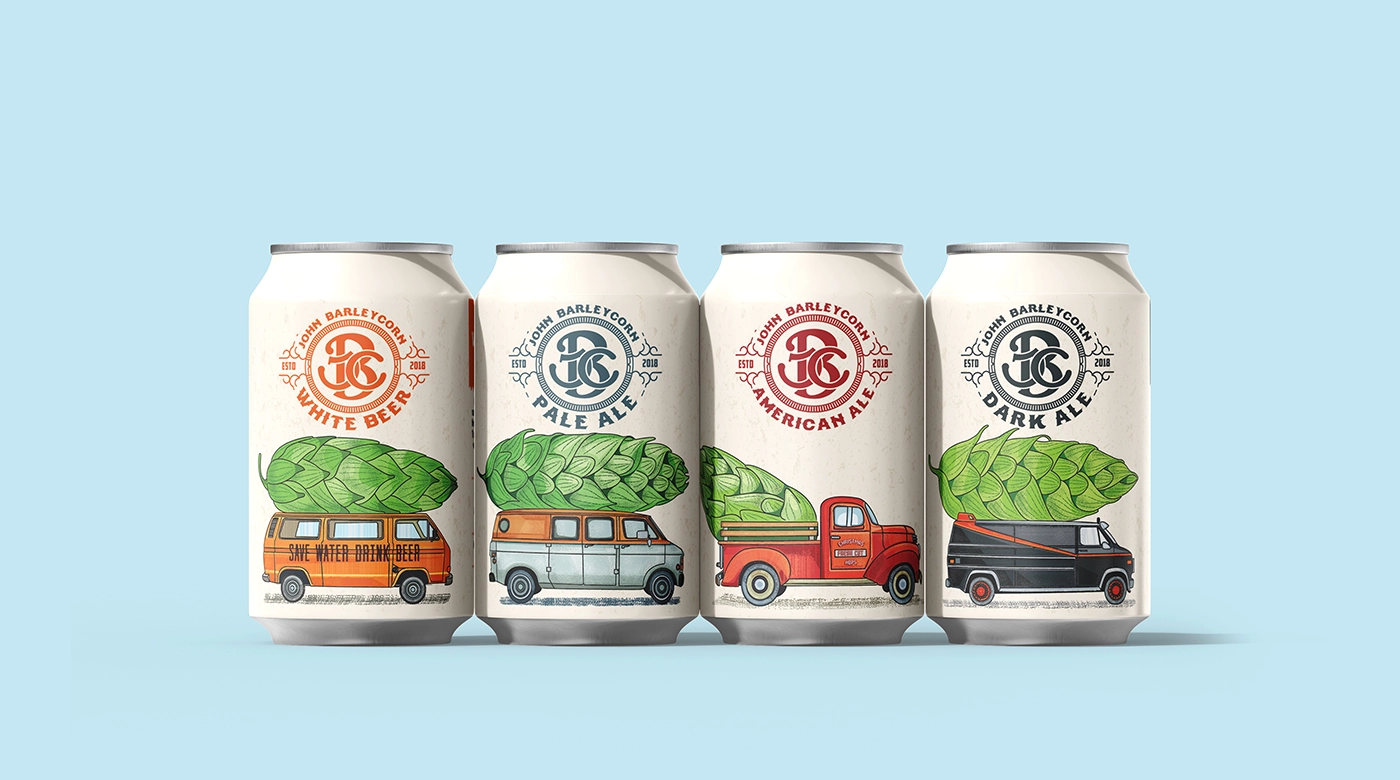
For John Barleycorn, the brewery was launching four beers at once: a white beer, a pale ale, an American ale, and a dark ale. We built the labels around one idea, a giant hop cone carried by a different vintage vehicle on each beer, from a delivery truck to a retro pickup. The four labels look like a set, and each is easy to tell apart.
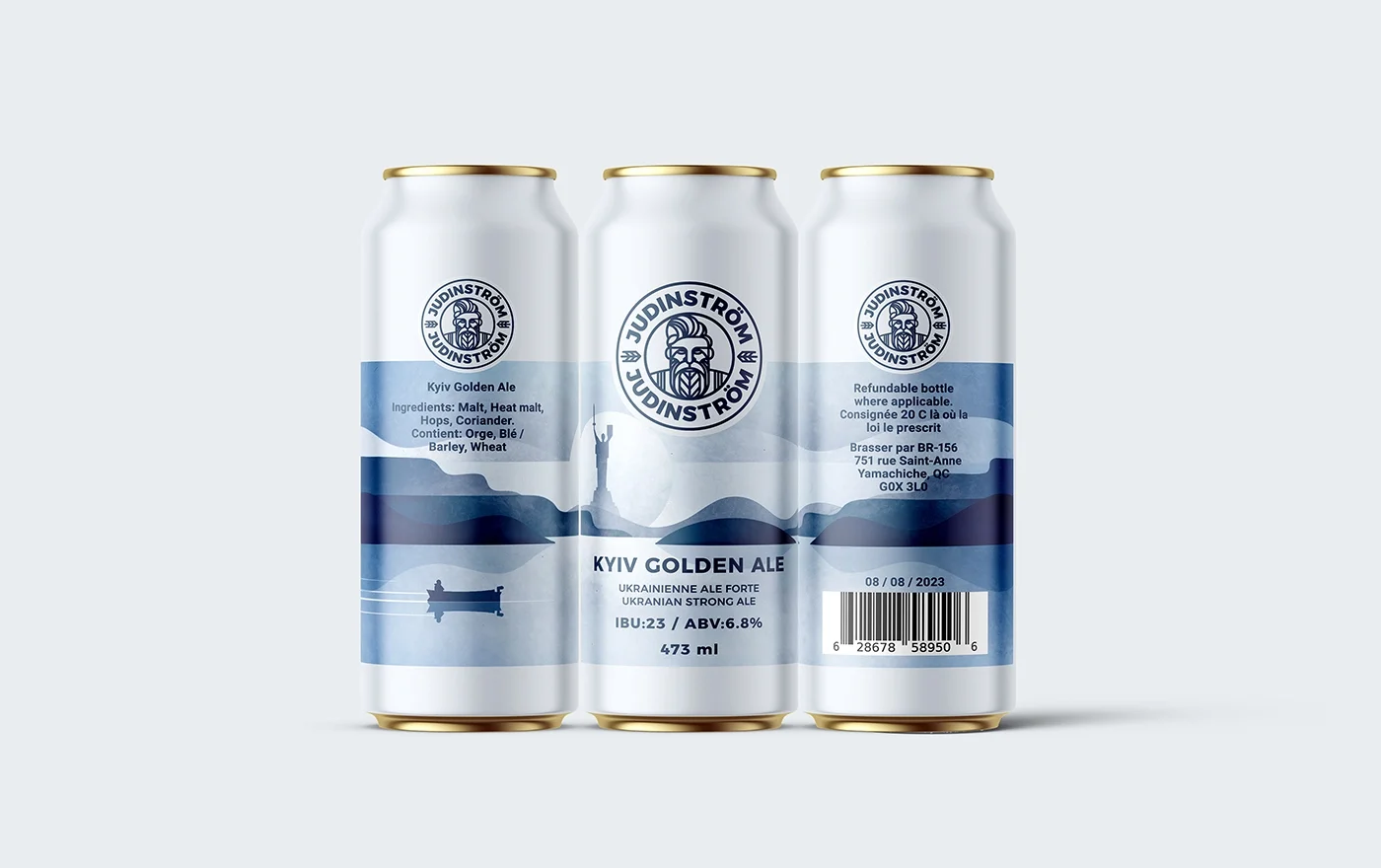
Judinström is a beer brand for a Montreal brewery, built from scratch with Scandinavian influences. We created the logo, a stylized character, and labels inspired by northern landscapes.
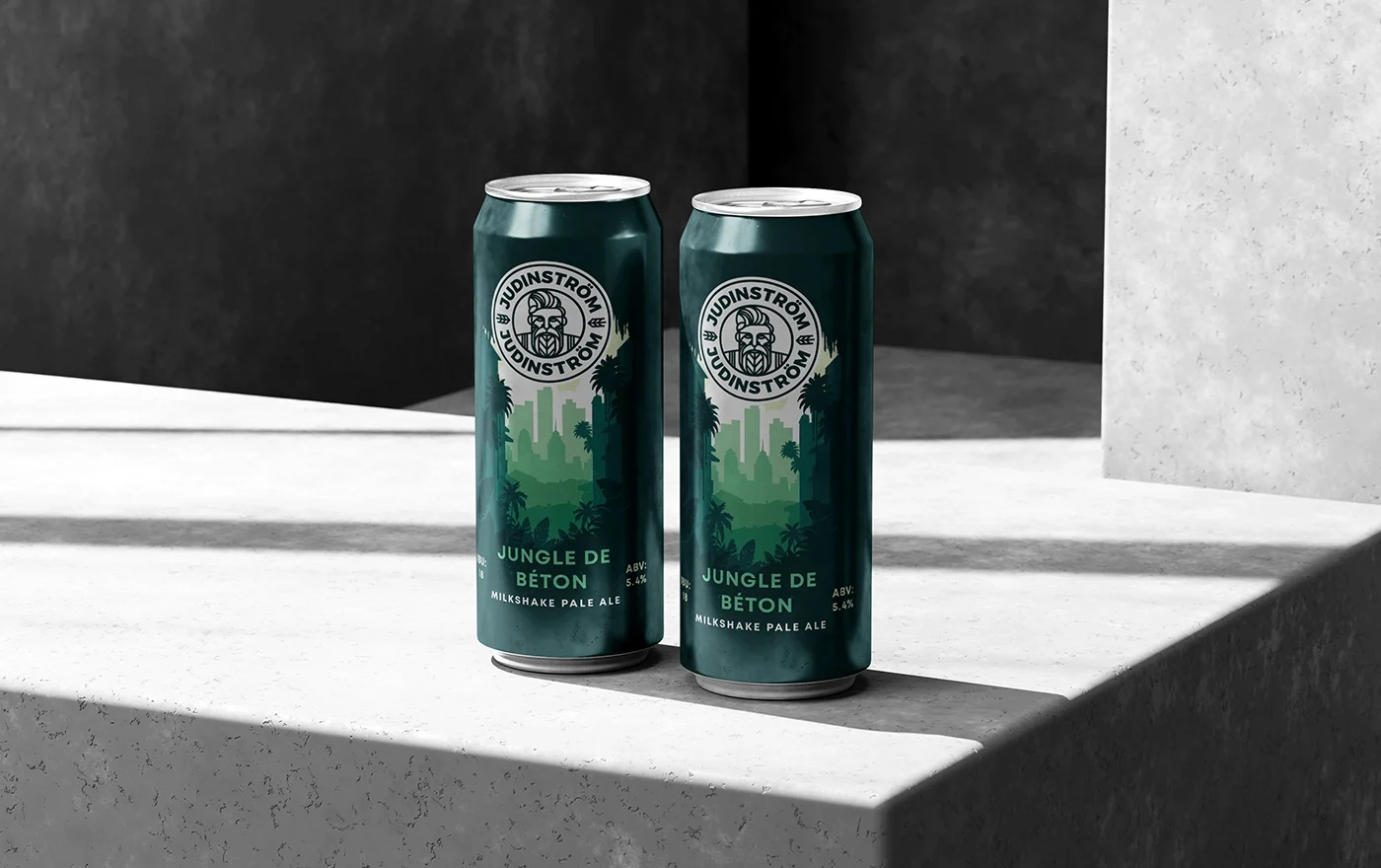
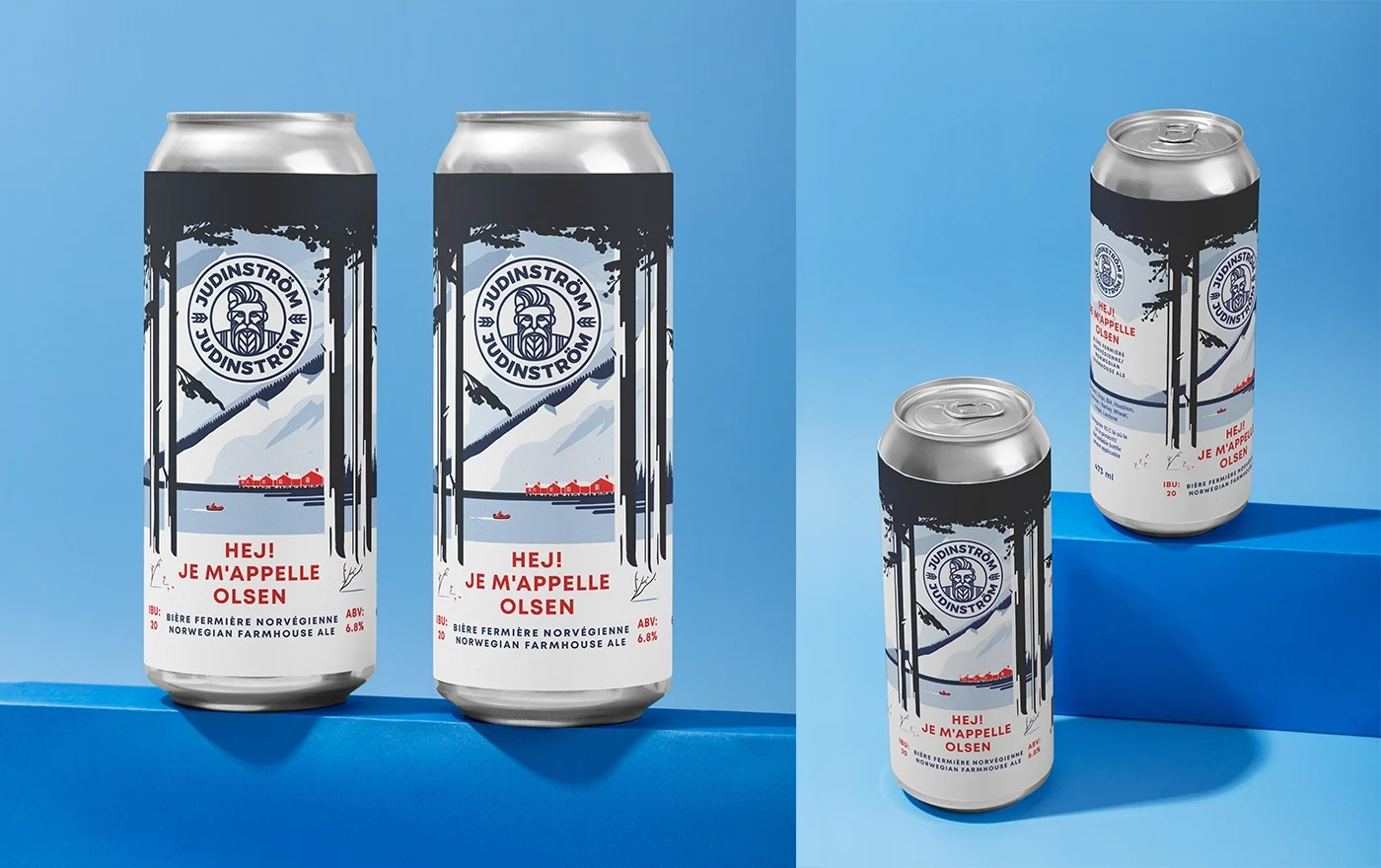
The same client’s Jungle de Béton moves from a city skyline into dense green jungle across the can, with a condensation effect that makes the beer look cold on the shelf. And for the limited farmhouse ale Hej! Je m’appelle Olsen, the label tells the story of a Norwegian character and his fjord. It’s a limited edition, but it still clearly belongs to the brand.
What beverage label design costs
At SOTDESIGN, a single label design starts at $1,500. A line designed as a system follows our packaging pricing: $2,500 for the system and the first label, then about $800 for each additional style or flavor. For example, a brewery launching four beers would pay $2,500 plus three more labels at $800, or $4,900. A new logo adds about $1,500, and carriers or cases are counted as additional SKUs. For a full breakdown, see our guide to packaging design pricing.
Working with us on beverage labels
We’re a design-only studio in Albany, NY, working with brands across the US, and we’ve been designing packaging for more than 10 years, with 80+ projects completed. Each project gets three concepts and up to three rounds of revisions. Once we’ve talked through the project, you get a fixed estimate in 1–2 business days, and most label projects are finished in two to three weeks. We prepare print-ready files for your printer or canning partner and can lay out the label so the required statements fit from the first draft. See our label design service for details.
ready to design your beverage labels?
beer, seltzer, juice, and coffee drinks, design only, with files ready for your printer
get quoteFAQ
01 What needs to be on a beer label?
For beer under TTB rules: the brand name, the class and type (such as “Ale” or “Lager”), the name and address of the brewer or importer, net contents, the government health warning, and declarations of certain ingredients like sulfites or Yellow No. 5 if present. Alcohol content is required only in some cases, but many brewers include it anyway.
02 Do I need label approval for my beer?
If your beer contains malted barley and hops and you sell it across state lines, yes, you need a COLA from TTB. Beer sold only in the state where it’s brewed doesn’t need one, but your state may require its own registration.
03 What is the best label material for drinks that get wet?
A film label, such as BOPP, with a water-resistant adhesive holds up best in coolers and ice. Shrink sleeves and printed cans are also durable. Uncoated paper labels can wrinkle and peel when wet.
04 How big does the government warning have to be?
At least 1 mm for containers of 8 fl oz or less, 2 mm for containers over 8 fl oz up to 3 liters, and 3 mm for larger ones, with limits on how many characters fit per inch. “GOVERNMENT WARNING” must be in bold capitals.
05 Does a canned drink need a Nutrition Facts label?
Non-alcoholic drinks regulated by FDA generally do. Beer, wine, and spirits regulated by TTB don’t currently require Nutrition Facts, although some brands add a voluntary serving facts statement.
06 Can I label my beer “non-alcoholic”?
Only if it contains less than 0.5% alcohol by volume, and the label has to say so in a statement next to the term. “Alcohol free” is reserved for products with no alcohol at all, and the label can’t call it “beer,” “ale,” or “lager,” though “near beer” is allowed.
07 How much does beverage label design cost?
A single label starts at $1,500 at SOTDESIGN. A line of labels built as one system costs $2,500 for the system and first label, then about $800 per additional style or flavor.