Skincare and Cosmetic Packaging Design: A Guide for Beauty Brands
Skincare and cosmetic packaging has two jobs that pull in different directions. It has to look good enough to be picked up, photographed, and left on a bathroom shelf, and it has to carry a lot of required information on very small surfaces: product identity, net contents, the full ingredient list, warnings, and a way to report reactions. Good design starts by deciding what goes on the container and what goes on the carton, then builds one visual system that makes every product in the line easy to tell apart.
In practice that means a clear order on the front (brand, what the product is, one benefit or ingredient, size), a color or finish code for each product or scent, a format and material that suit the formula and where it’s sold, and labeling that follows FDA rules and the newer requirements from the Modernization of Cosmetics Regulation Act (MoCRA).
We’ve worked on beauty and body care packaging for over 10 years. A beauty packaging system with its first product starts at $2,500 with us, a single label at $1,500, and each product added to the system about $800. We design only and deliver files ready for your printer and packaging supplier.
Common skincare and cosmetic packaging formats
| Format | Typical products | Design notes |
|---|---|---|
| Jar | Creams, balms, scrubs, masks | Wide lid is a second front; label or direct print on the side |
| Tube | Cleansers, hand cream, sunscreen | Flat front and back; crimped end eats space at the bottom |
| Airless pump or pump bottle | Serums, lotions, foundations | Narrow, tall front; small type fills up fast |
| Dropper bottle | Facial oils, serums | Often glass with a label; usually sold in a carton |
| Stand-up pouch | Body scrubs, bath salts, refills | Large front, good for color; needs a moisture-safe build |
| Compact or palette | Powders, eyeshadows | Lid design and the inside label both matter |
| Folding carton | Premium skincare, kits, lashes | The retail face of the product; carries most of the text |
| Sachet or sample | Trials, gifts with purchase | Tiny space; free samples can skip the ingredient list, but sold trial sizes need the full label |
Your filler or packaging supplier chooses the structure based on the formula, compatibility with the material, and how the product is dispensed. Design starts once the components are picked and you have their templates. If you haven’t worked with packaging templates before, our guide to what a dieline is explains what to ask for.
Container or carton: decide where the text lives
Most beauty products have two layers of packaging. The primary package touches the product: the jar, tube, or bottle. The secondary package is the carton around it. They do different work.
The carton sells the product in a store. It has room for the full name, benefits, directions, the ingredient list, and the brand story, and it protects glass in shipping. The container lives in the bathroom for months. It needs the brand, the product name, and what’s legally required on it, and it should still look good after it’s been wet, oily, and handled every day.
When a product has no carton, everything required has to fit on the container. That is common for tubes and pump bottles in drugstores and for DTC brands that ship in a mailer. Plan the copy first, then the layout. On a 30 ml pump bottle, an ingredient list can take up a third of the label.
What goes on the front
Beauty shoppers compare products fast, especially online. The front works best in this order:
- Brand. In the same position and size across the line.
- What the product is. “Gentle cleanser,” “vitamin C serum,” “coffee body scrub.” A beautiful pack that doesn’t say what’s inside loses the sale to a plainer one that does.
- One ingredient or benefit. The ingredient people search for, or a single benefit such as “hydrating” or “for sensitive skin.” Avoid wording that promises to treat a condition (more on that below).
- Size. Net contents on the front panel, in the bottom 30% of the area.
- Variant marker. A color, a scent name, or a number, so the line reads as a set and each product is easy to find.
Online, test the front as a small thumbnail next to competitors. Most beauty products are first seen that way.
Materials, finishes, and decoration
In beauty, material and finish carry as much meaning as color. Frosted glass, heavy jars, metal accents, and soft-touch cartons read as premium. Clear plastic, bright solid colors, and simple labels read as fun and affordable. Neither is better; it depends on the price and the buyer.
The decoration method changes the design:
- Labels allow full color and fine detail and are the easiest to update when copy changes.
- Direct screen printing on glass or plastic looks cleaner but usually limits you to a few solid colors and coarser detail.
- Hot foil stamping and embossing on cartons add metal and texture. They need simple shapes and a separate file for each effect.
- Shrink sleeves cover the whole container and work for bold, all-over graphics.
Products used in the shower or bath need labels and inks that survive water and oil. Ask your printer for a moisture-resistant label stock and laminate, and test a sample in real use for a couple of weeks before the full run.
Two beauty projects from our work
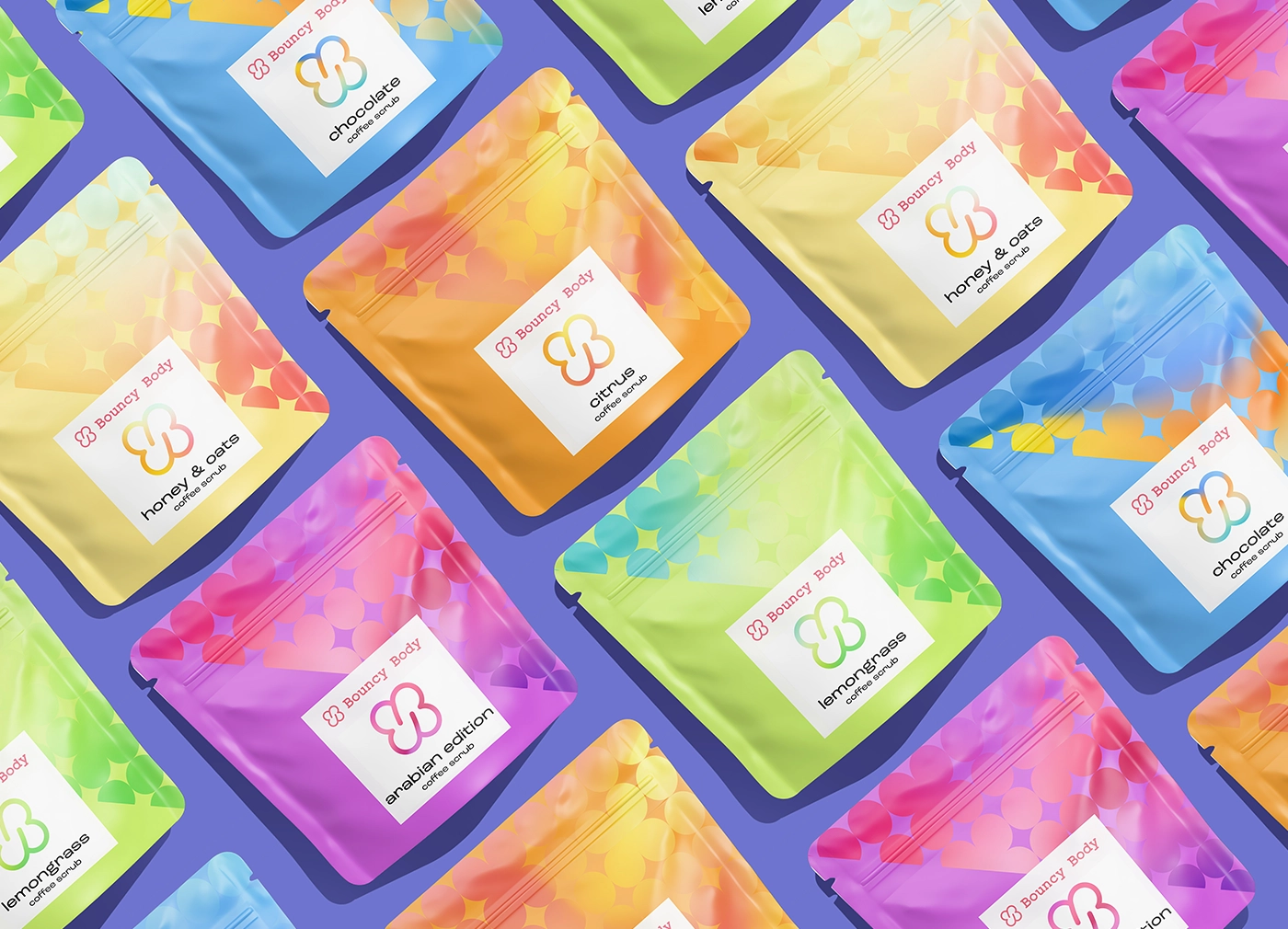
Bouncy Body, natural coffee scrubs. The line covers several scents (citrus, chocolate, honey and oats, lemongrass, and an Arabian blend), sold both online and in stores. We designed a set of bright stand-up zipper pouches, each scent in its own vivid color, with a soft gradient bubble pattern that suggests foam and smooth skin. A simple central label holds the product name, and a rounded “B” logo ties the line together. The pouches had to work in a humid bathroom, stand out in photos and on social media, and stay within a budget that suits both DTC and retail. The system leaves room for new scents, gift sets, and limited editions without a redesign.

Wink Lashes, professional lash products. A German brand of eyelash extension supplies, with a range from removers and primers to adhesives and lash boxes. The packaging uses matte black cartons with copper foil, a calm grid, and an eye graphic with radiating lines that became the brand’s main symbol. Several box sizes share one design language, the cartons are recyclable paperboard, and we also produced the brand book that keeps future products consistent. The project won a Gold A’ Design Award.

Two very different answers for two very different buyers: playful color for a young self-care audience, quiet luxury for salon professionals.
planning a skincare or beauty line?
send us your products and formats: one system for jars, tubes, and cartons, fixed estimate in 1-2 business days
get quoteLabeling rules to plan before design
This is a design guide, not legal advice, but the label rules decide how much space the text takes, so they belong at the start of a project. The main points for cosmetics sold in the US (FDA Cosmetics Labeling Guide):
- Statement of identity on the front: what the product is, in plain words.
- Net contents on the front, in the bottom 30% of the panel (very small panels are exempt from the placement rule), in US units with metric alongside, since federal packaging law calls for both.
- Ingredient list in descending order of predominance, using the standard ingredient names (21 CFR 701.3). Ingredients at 1% or less can follow in any order, and color additives can be grouped at the end.
- Name and place of business of the company responsible: the manufacturer, packer, or distributor.
- Warnings and directions where the product needs them.
- Contact for adverse event reports. Under MoCRA, labels must include, since December 29, 2024, a domestic address, domestic phone number, or electronic contact such as a website, so people can report reactions (FDA on MoCRA).
- Professional use. Products meant only for licensed professionals need a clear and prominent statement saying so.
One change is still coming. MoCRA requires FDA to set rules for listing fragrance allergens on labels. As of October 2026, FDA has not yet published even a proposed rule; its regulatory agenda targets a proposal for November 2026, with a final rule and compliance date to follow. So a product that lists “fragrance” today may need individual allergens on the label later. If your line uses fragrance, leave some extra room in the ingredient area.
Cosmetic claims vs drug claims
How you describe a product decides whether FDA treats it as a cosmetic or a drug. Words like “moisturizes,” “smooths,” and “brightens the look of skin” describe a cosmetic. Words that promise to treat or prevent a condition, such as “treats acne,” “SPF 30,” “anti-dandruff,” or “regrows lashes,” make it a drug, and drugs sold over the counter need a Drug Facts panel and must meet drug rules.
For design, the safest route is to decide the claims with your regulatory reviewer before the copy goes on the pack. Moving from “clears breakouts” to “for blemish-prone skin” after artwork is approved usually changes the front panel.
Some popular words have no FDA definition at all: “clean,” “natural,” “non-toxic,” and “hypoallergenic.” They aren’t banned, but they have to be true and not misleading. “Organic” on products made with agricultural ingredients falls under the USDA National Organic Program.
Sustainability in beauty packaging
Beauty buyers notice packaging waste. Several states have passed packaging EPR laws, and some, starting with Oregon, already charge brands fees for the packaging they sell, which we covered in our 2027 packaging trends guide. Common moves:
- Refills. A durable main container and a lighter refill pouch or cartridge. The refill needs its own design, clearly part of the same family.
- Fewer components. Dropping the carton where a product doesn’t need it, or using a smaller one.
- Mono-material and recycled content. Easier to recycle, though recycled plastic can have a slight tint, and the colors in the design should allow for it.
- Honest claims. Recycling symbols and “recyclable” claims need to match the real material and local programs.
How a beauty packaging project runs
- Brief. Products, formats, components, where you sell, who buys, and the claims you want to make. Use our brief template as a checklist.
- Components and templates from your supplier: jars, tubes, bottles, cartons, and their dielines.
- Copy. Product names, claims, ingredient lists, and required statements, checked by your regulatory reviewer.
- Concepts. Three directions on one lead product.
- Revisions and system rollout to every product, carton, and refill.
- Print-ready files for each piece and decoration method.
What skincare packaging design costs
Beauty lines are priced per system and per product. Building the system around the first product starts at $2,500; each further product, size, or scent in it is about $800; a logo is about $1,500; and a label on its own starts at $1,500.
| Project | Calculation | Approximate design cost |
|---|---|---|
| Body scrub line, 5 scents in pouches | $2,500 + 4 × $800 | $6,500 |
| New skincare brand: logo plus 3 products | $1,500 + $2,500 + 2 × $800 | $5,600 |
| Label for one serum bottle | from $1,500 | from $1,500 |
Cartons, refills, and gift sets are separate pieces, so list them in the brief. For a full breakdown, see how much packaging design costs. To see how we work on labels and full packaging systems, visit our label design and packaging design pages.
ready to design your skincare packaging?
design only, files ready for your printer and supplier · fixed estimate in 1-2 business days
get quoteFAQ
01 What are the main types of cosmetic packaging?
The most common are jars, tubes, pump and airless bottles, dropper bottles, stand-up pouches, compacts, folding cartons, and sachets. The choice depends on the formula, how it’s dispensed, compatibility with the material, and where the product is sold.
02 What must be on a cosmetic label in the US?
The product identity and net contents on the front, an ingredient list in descending order, who makes or distributes it (name and place of business), any required warnings, and, under MoCRA, contact information for adverse event reports. Products for professional use only need a statement saying so.
03 How do you package skin care products?
Choose the container with your filler or packaging supplier based on the formula, then decide what text goes on the container and what goes on the carton. Build one visual system for the line, test labels in real bathroom conditions, and prepare print files on the supplier’s templates.
04 What is the difference between primary and secondary cosmetic packaging?
Primary packaging holds the product, such as a jar, tube, or bottle. Secondary packaging surrounds it, usually a folding carton, and carries more of the text and the retail presentation.
05 Can I say “clean” or “natural” on my skincare packaging?
FDA doesn’t define “clean,” “natural,” or “hypoallergenic,” so the words are allowed, but they must be truthful and not misleading. Claims that promise to treat a condition, such as acne, can make the product a drug.
06 How much does skincare packaging design cost?
With us, a beauty packaging system starts at $2,500 including the first product, then about $800 per product; a label alone starts at $1,500. A five-scent body scrub line comes to about $6,500.